When a fever hits, many North Sumatrans reach for leftover antibiotics or a traditional jamu rather than queue at a community health center. The numbers from the province's 2023 socio-economic survey (Susenas) reveal just how widespread that habit is — and pose an unexpected question for public health officials.
What's the single biggest reason people stay away from clinics?
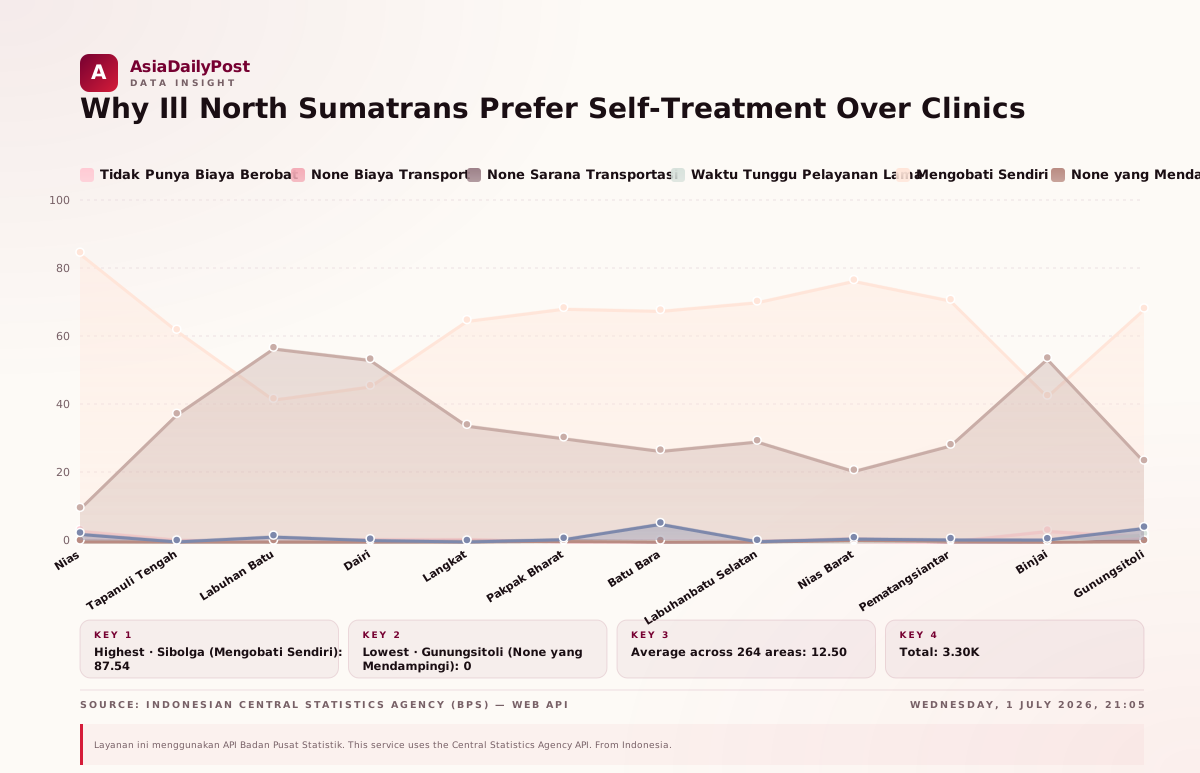
Self-treatment — "mengobati sendiri" — dominates in every single regency and city across North Sumatra. In Sibolga, 87.5% of residents who reported a health complaint but skipped outpatient care listed self-medication as the main reason. The pattern holds strongly in Nias (84.7%) and Tanjungbalai (82.7%), as well as in more urbanised Medan, where self-treatment still accounted for over half of non-visits.
Isn't it just a lack of money or transport?
Surprisingly, cost and accessibility barely crack the ranking. No more than 4.4% of non-seeking respondents in any area cited affordability of care itself, and transport costs or lack of vehicles registered below 3% everywhere. Even "long waiting time" as a barrier peaked at just 5.4% in Tapanuli Utara. The data suggests that the obstacles are less about logistics and more about perception.
Which areas buck the self-treatment trend?
While self-care remains the top reason in every district, the mix behind it shifts. In the fertile Karo highlands (Karo), self-treatment accounts for just 33.9%, while 64.7% of non-visitors say they simply felt it was unnecessary. A similar pattern shows up in Dairi (45.6% self-treatment, 53.4% felt unnecessary) and Pakpak Bharat (68.4% self-treatment, 30.3% felt unnecessary) — places where the perceived need for formal care is especially low. In fact, the "felt unnecessary" category is the second-largest reason province-wide.
- Sibolga, Nias, and Tanjungbalai exceed 82% self-treatment, leaving little room for any other explanation.
- In 29 of the province's 33 regencies and cities, self-treatment is the single largest reason for avoiding outpatient care.
- No districts reported zero for self-treatment; the lowest was still a substantial 33.3% in Padang Lawas Utara.
As North Sumatra rolls out universal health coverage, the 2023 figures raise a sobering question: if people can afford care and reach a clinic without hardship, what — other than a cultural shift — will actually get them through the door? The answer may matter more than any co-pay policy.
Source: Indonesian Central Statistics Agency (BPS) — Web API · Wednesday, 1 July 2026, 21:05