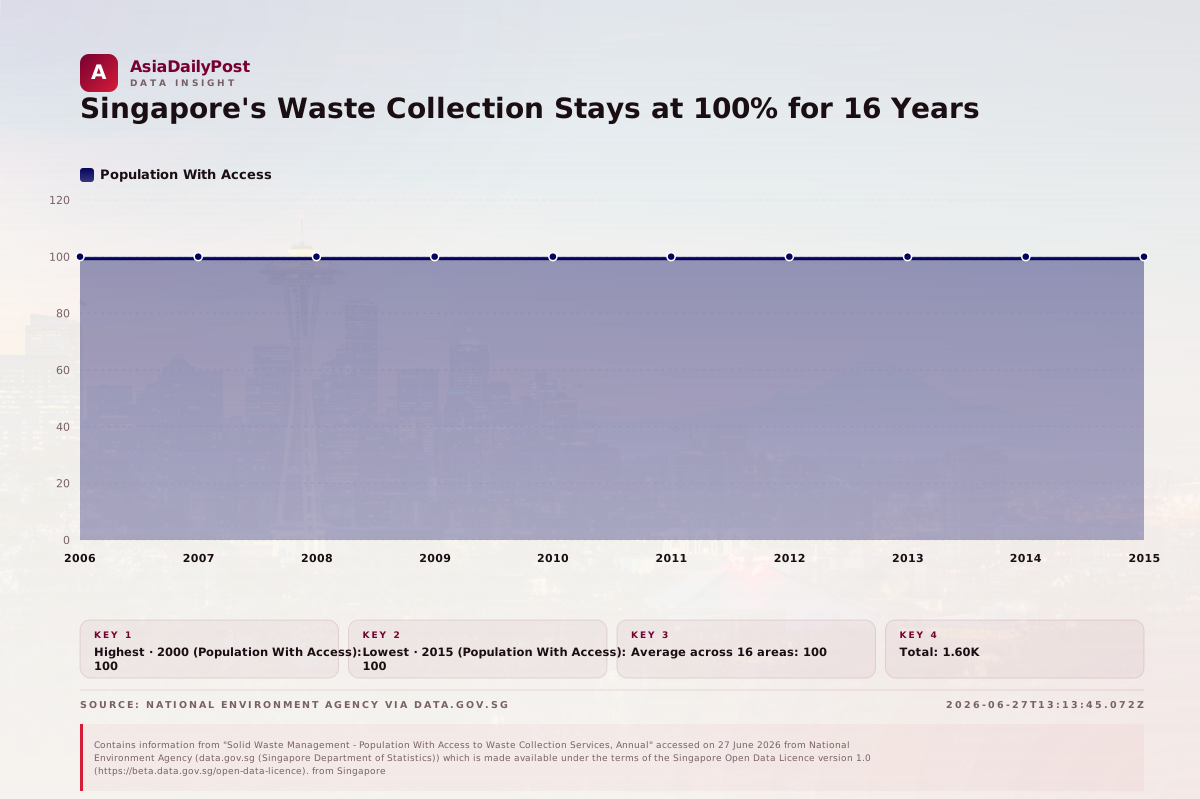
For 16 straight years, every single resident in Singapore could count on having their trash collected, according to National Environment Agency data. The access rate held steady at 100% from 2000 through 2015 without a single percentage point of deviation, a streak that is quietly remarkable.
The unbroken streak
In a world where public service delivery often fluctuates with budget cycles or economic shocks, Singapore's universal waste collection is a quiet marvel of municipal planning. The dataset, covering 16 annual readings, shows not a single year where access fell below complete coverage. The system works through a tightly integrated network of daily door-to-door collection, centralised refuse chutes in public housing, and a publicly-managed incineration and landfill chain that leaves no household behind. Few other dense urban centres can claim uninterrupted 100% waste collection access over a comparable timeframe, making Singapore an outlier in environmental management.
What this actually means
For residents, this isn't a statistic — it's the absence of anxiety about overflowing bins or informal dumping. For businesses, it's a predictable sanitation environment that supports everything from food safety compliance to real estate valuations. The flat 100% line also sets a baseline for any future discussion about recycling rates or waste reduction targets.
- Sixteen consecutive years at 100% coverage.
- No variation across the entire measurement period.
- Universal collection backed by public housing infrastructure.
When waste collection is universal and this unwavering, the real question shifts from access to what comes next — like driving down incineration volumes or boosting recycling rates across the island's housing estates.
Source: National Environment Agency via data.gov.sg · 2026-06-27T13:13:45.072Z