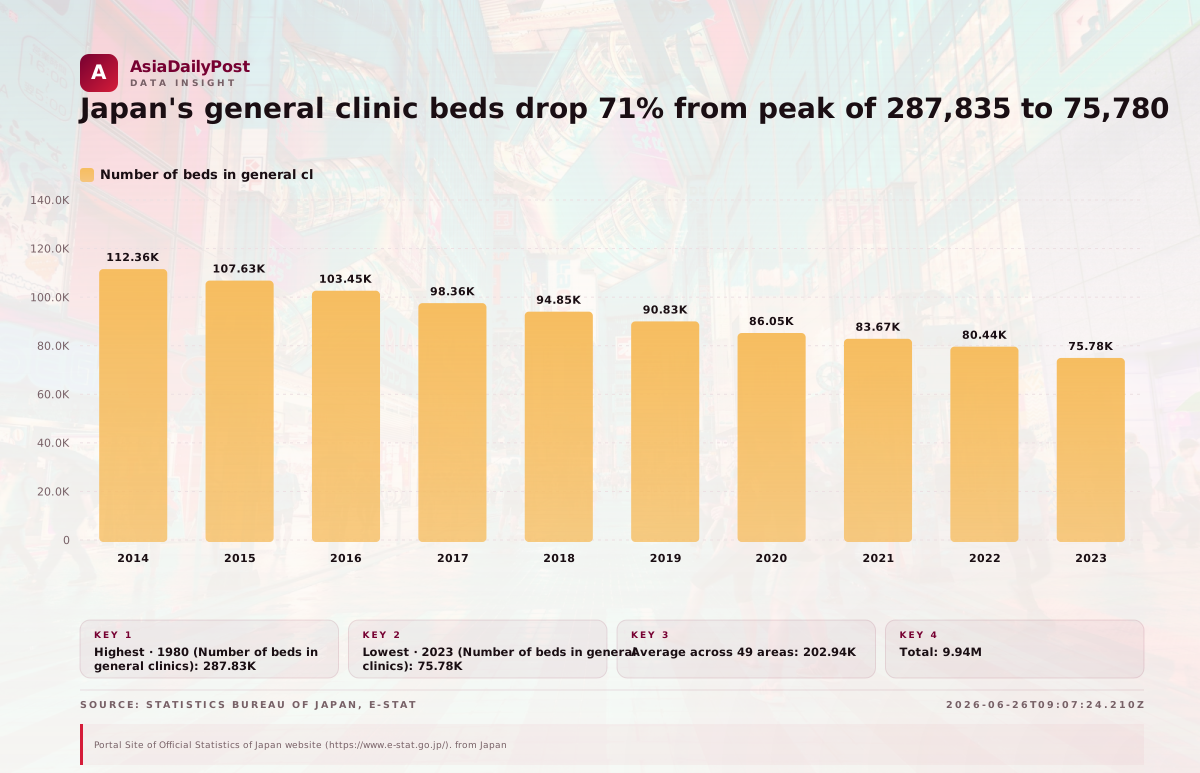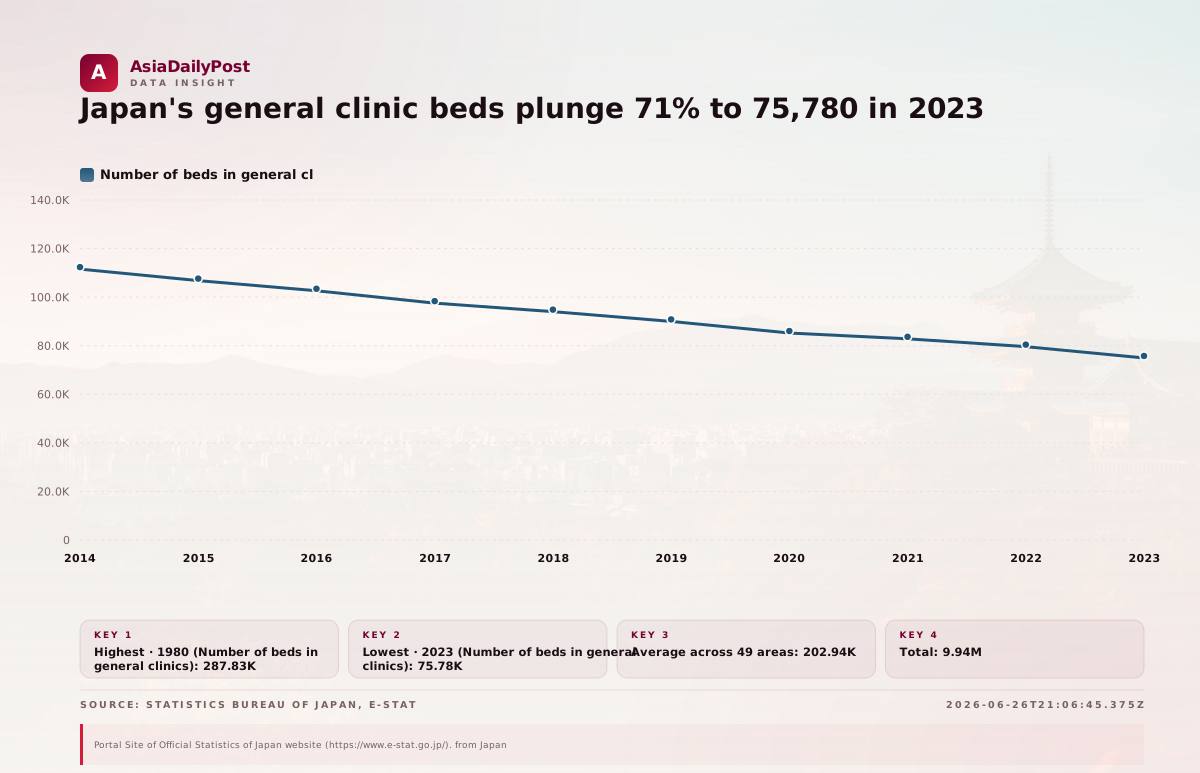
In 1980, Japan's general clinics operated 287,835 beds — the highest tally in a half-century dataset stretching from 1975 to 2023. By 2023, that number had crashed to just 75,780, a loss of more than 211,000 beds and a decline of 71.3 percent. The Statistics Bureau's time series captures the near-extinction of inpatient beds at small medical clinics across the country.
Top of the chart: 1980
The 1980 peak of 287,835 beds capped a rapid build-up through the late 1970s. In 1975, general clinics held 264,085 beds; by 1978, they had reached 277,685, and the high-water mark arrived just five years into the series. That expansion reflected a post-war model in which neighbourhood clinics routinely admitted patients for short stays, supplementing the hospital system. But the apex was fleeting — after a minor wobble in the early 1980s, the bed count began a near-uninterrupted slide that would extend for more than four decades.
The other end: 2023
By 2023, only 75,780 beds remained — the lowest figure on record. The descent was gradual but relentless: the tally dipped below 200,000 for the first time in 2002 (196,596), then under 150,000 by 2008 (146,568), and beneath 100,000 in 2019 (90,825). The pandemic years accelerated the fall: 86,046 in 2020, 83,668 in 2021, 80,436 in 2022, and finally 75,780 in 2023. Each year brought a new historic low, underscoring just how thoroughly general clinics have shed their inpatient role.
What separates the two
The 212,055-bed gap between the 1980 peak and the 2023 trough hinges on a deliberate policy-led migration away from clinic-based hospitalisation. As Japan's population aged rapidly, the government expanded long-term care insurance, home nursing, and outpatient day services. Regulatory changes made it financially unattractive for small clinics to maintain overnight beds, while larger hospitals absorbed more complex inpatient cases. The data suggests that a facility type once central to community medicine has almost entirely exited the inpatient business, redirecting its resources to outpatient consultations and preventive care.
- 1980: 287,835 beds
- 1975: 264,085 beds
- 1990: 272,456 beds
- 2000: 216,755 beds
- 2010: 136,861 beds
- 2020: 86,046 beds
- 2023: 75,780 beds
Every single year in the 49-year series shows a decline from the previous peak, with only minor fluctuations in the late 1970s and 1989 breaking the downward trend. With no policy reversal visible, the 2023 low is likely to be tested again in subsequent releases, as the few remaining clinic beds continue to dwindle.
Source: Statistics Bureau of Japan, e-Stat · 2026-06-26T21:06:45.375Z