Singapore’s retail sales are painting a picture of a consumer who is spending generously on groceries and restaurant meals while all but walking straight past the entrance of the department store. That split-screen reality, captured in a government data series tracking monthly sales through December 2025, is giving mall operators and policymakers a conundrum to chew on as the economy hums along: the island’s shopping habit is bifurcating, and the old anchor tenants may never fully recover.
A retail recovery running at two speeds
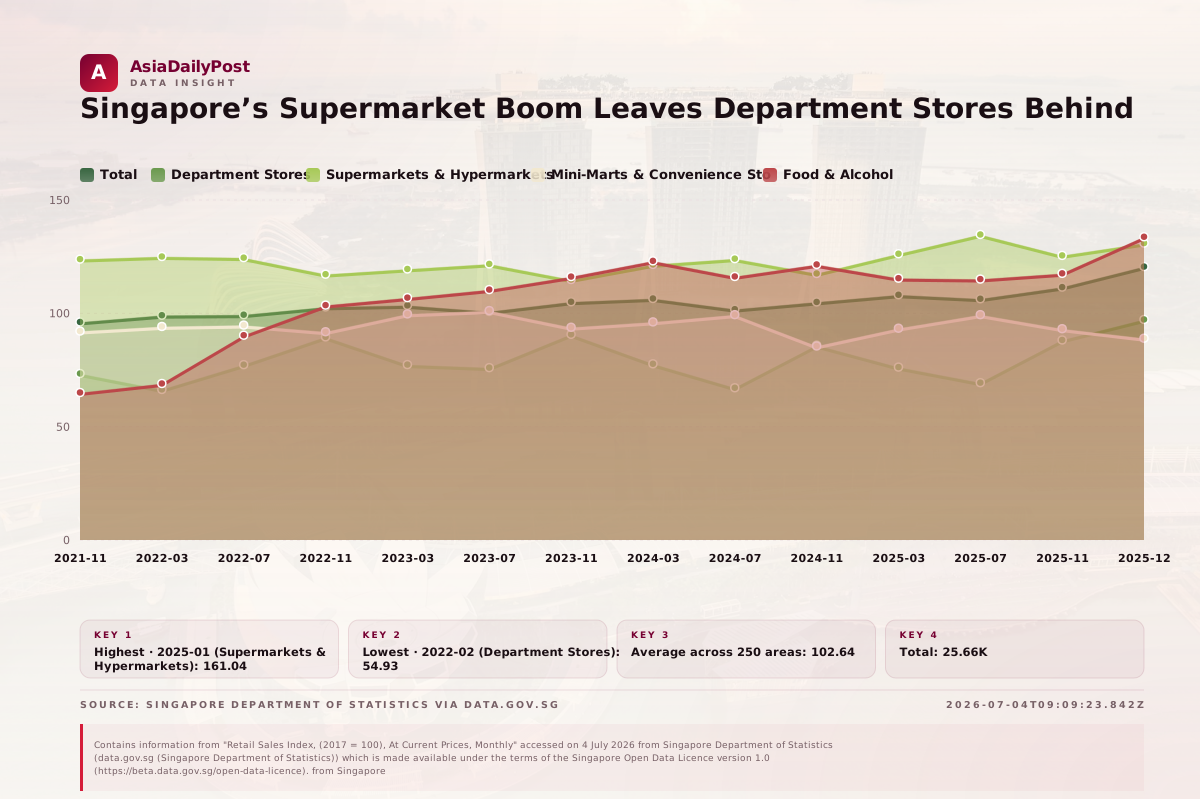
At the top of the leaderboard, Supermarkets & Hypermarkets notched an index reading of 161 in January 2025 — their highest point in a series that stretches back to November 2021. Department Stores, by contrast, bottomed out at a meagre 55 in February 2022 and still could not break back above the 100 baseline even by the final month of 2025, when the sector recorded a relatively anemic 97.3. The divergence is stark: one category has been running more than 60 points above the 2017 reference year, the other is effectively stuck in contraction territory.
The quiet rise of food and drink spending
While supermarket sales grab headlines, the Food & Alcohol segment has quietly turned into the outperformer. In December 2025, the index hit 133.8, nudging ahead of the supermarket reading of 131.0 and suggesting that Singaporeans are pouring more of their wallet into dining out, bars, and premium grocery items than ever before. It’s a pivot that recasts the story from a simple grocery-vs-department-store binary into a tale of experience-led spending.
The gap between grocery aisles and department stores hasn't closed
Strip away the seasonal swings and the blunt total index — which averaged 102.6 over the 50 months of data — and a structural rift remains. Department stores were still trailing the 2017 baseline through 2025, while Supermarkets & Hypermarkets stayed comfortably above 130 for much of the year. Mini-marts & Convenience Stores fared even worse, limping to 89.0 in December 2025 and never having reclaimed the benchmark once since the data series began. All of this plays out against a backdrop of a total retail sales index that ended 2025 at 120.6 — a level that, because the series is measured in current prices, likely owes part of its rise to inflation rather than swelling sales volumes. That nuance means policymakers and investors cannot take the headline total at face value; the real action is inside the category splits.
- Supermarkets & Hypermarkets reached 161 in January 2025 and stayed above 130 for eight of the next 11 months.
- Department Stores stayed below the 100 benchmark after February 2023, managing just 97.3 in December 2025.
- Food & Alcohol surged to a series peak of 133.8 in December 2025, overtaking all other categories.
- Total retail sales crept up to an index of 120.6 in December, but inflation likely exaggerated the headline gain.
For a city that prides itself on being a shopping paradise, the numbers suggest a consumer who has permanently shifted priorities — stocking the fridge trumps browsing the racks, and a meal out still beats a new winter coat. Whether department stores can regain their footing, or whether the evolution is now structural, is the open question that 2026’s data will have to answer. Policymakers watching the economy's domestic engine will be paying close attention.
Source: Singapore Department of Statistics via data.gov.sg · 2026-07-04T09:09:23.842Z