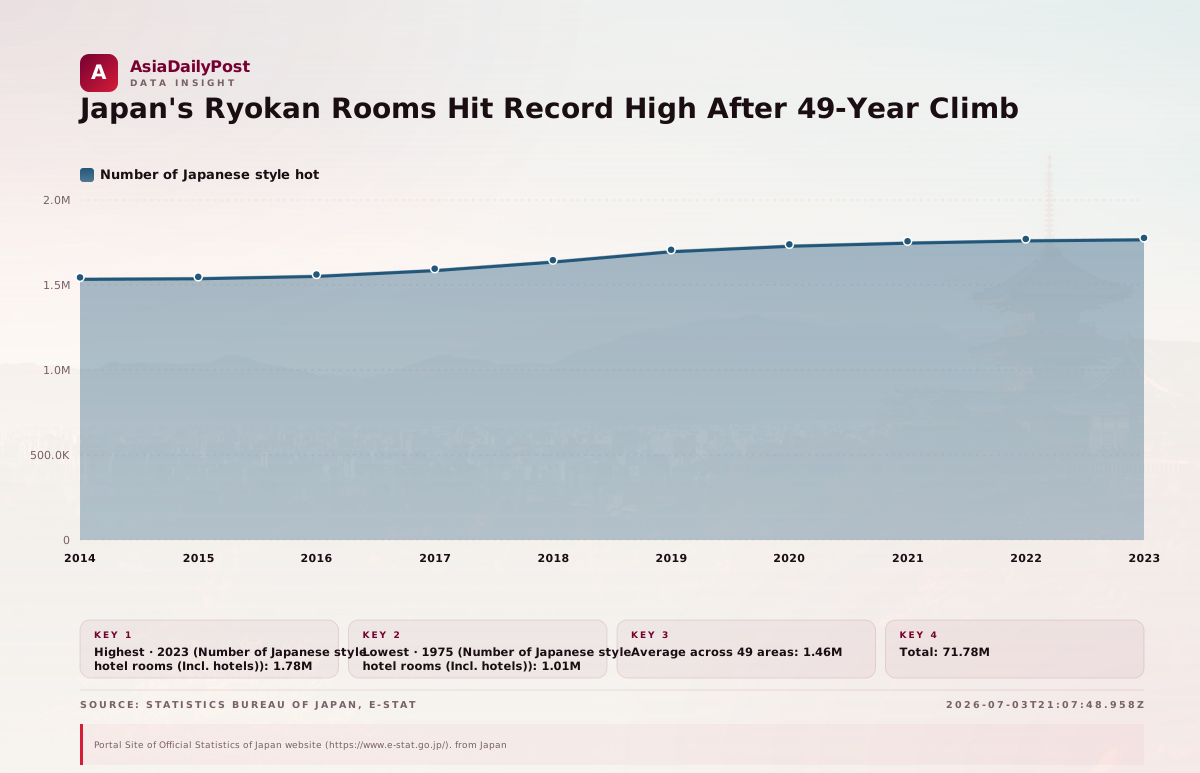
The number of Japanese-style hotel rooms across Japan climbed to 1,776,994 in 2023, the highest point in nearly five decades of government data, extending a growth streak that shrugged off a pandemic-era tourism collapse. The total, drawn from the Statistics Bureau's e-Stat database, represents a 75% leap from the 1,012,880 rooms recorded when tracking began in 1975.
A steady rise
e-Stat figures show the room count moved from 1.01 million in 1975 to just under 1.71 million in 2019, interrupted only by brief dips in the early 2000s and after the 2008 global financial crisis. The sector regained its pre-2000 high by 2013, then accelerated, adding roughly 270,000 rooms over the following decade. By 2022, annual totals had already surpassed the pre-pandemic level and kept climbing.
The pandemic surprise
While inbound tourism plunged to near zero in 2020 and 2021, domestic overnight stays propped up ryokan occupancy. Government travel subsidy campaigns, such as Go To Travel, and a pandemic-era preference for regional onsen trips meant the room supply never contracted in aggregate. This diverged sharply from large city hotels, where hundreds of Western-style properties closed or converted to residential use.
By the numbers
Across the 49-year time series, the average annual room count sat at roughly 1.46 million, making the 2023 figure about 21% above the long-run mean. The cumulative room-years totaled more than 71.7 million, highlighting the deep physical footprint of traditional lodging even as modern chain hotels proliferate.
- All-time high: 1,776,994 rooms in 2023, a 75% increase from 1975.
- Lowest point: 1,012,880 rooms in 1975, the first year of measurement.
- Pandemic bump: Room count rose 4.1% from 2019 to 2023, defying global hospitality headwinds.
- Long-term average: 1.46 million rooms per year across the series.
- Decade gain: More than 200,000 rooms added since 2010.
With Japan's inbound arrivals shattering records in 2024 and 2025, the ryokan room base appears primed to capture renewed international demand. Whether the nearly uninterrupted 49-year expansion can continue may depend on rural depopulation, available hospitality workers, and shifting traveler tastes toward modern branded lodgings.
Source: Statistics Bureau of Japan, e-Stat · 2026-07-03T21:07:48.958Z