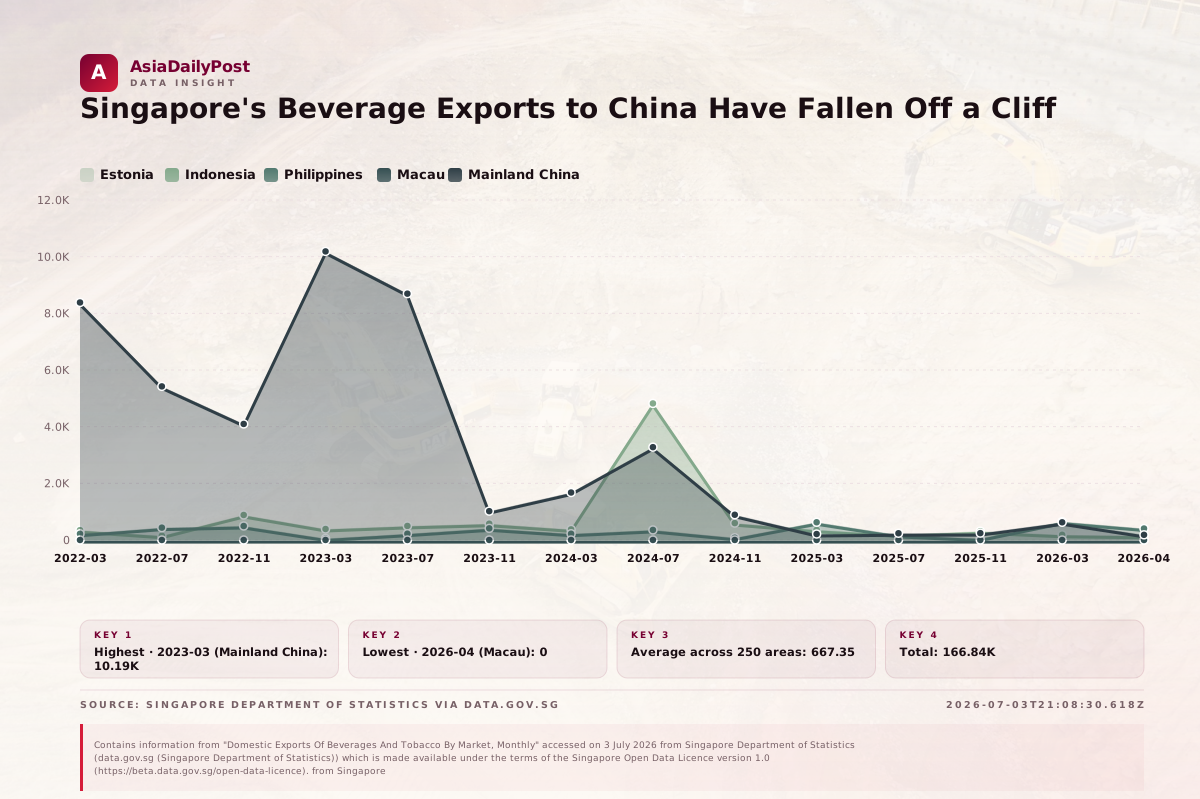
A river of beverage and tobacco exports from Singapore to Mainland China that once ran at millions of dollars a month has slowed to a trickle. Monthly trade figures show a near-total collapse in shipments to what was, until recently, the island's biggest buyer, leaving industry players to ask whether the market has shifted structurally.
How big was China as a buyer?
In March 2023, Singapore shipped S$10.2 million worth of drinks and tobacco to Mainland China, the highest single month in the 50-month series covering early 2022 to April 2026. That one-month figure was more than 26 times the value that went to Indonesia, the next-largest destination. Over the entire period, China dominated, but the size of that dominance has collapsed. By April 2026, the monthly export value to China had fallen to just S$182,000 — barely one-fiftieth of the peak.
What about other major destinations?
Indonesia and the Philippines have also seen a steady decline in drinks and tobacco imports from Singapore, though the drop is less extreme. Indonesia bought S$348,000 in the first month of the series and ended at S$149,000. The Philippines started stronger at S$220,000 and fell to S$405,000 in April 2026 after a brief spike earlier in the year.
Did a single event trigger the fall-off?
The data show no sudden regulatory shock. Instead, there's a slow grind. After that peak month in early 2023, China's monthly purchases dipped below S$2 million by mid-2024. In the whole of 2025, no month reached S$800,000, and in the first four months of 2026 they've stayed under S$650,000.
- From January 2025 onwards, the average monthly export value to China was just S$348,000, compared to S$5.1 million in 2022.
- Macau recorded only one shipment — S$5,000 in April 2024 — across the entire four-year period.
- Estonia received zero shipments in the series, underscoring the regional concentration of Singapore's beverage and tobacco exports.
The numbers make it hard to avoid the conclusion that something fundamental has changed in China's demand for Singapore-made drinks and tobacco. Whether that's a consumer shift, tighter border controls, or a deliberate move by suppliers to other channels is a question the data can't yet answer.
Source: Singapore Department of Statistics via data.gov.sg · 2026-07-03T21:08:30.618Z