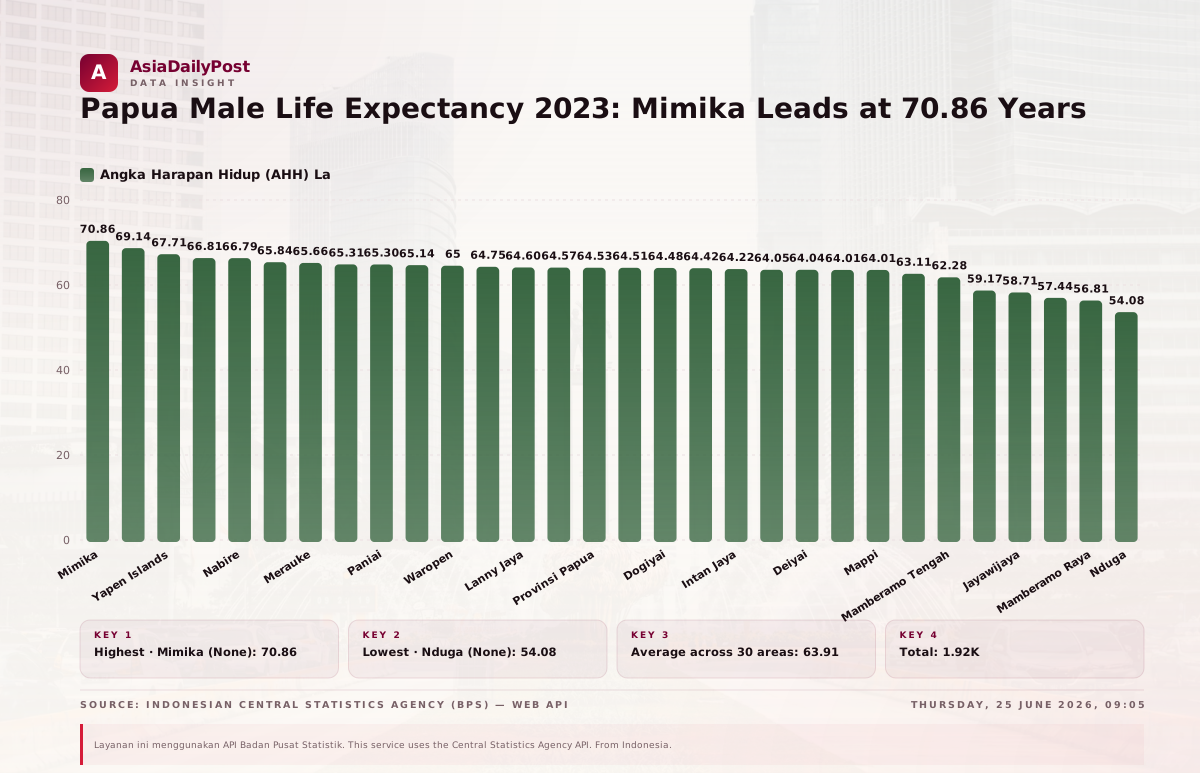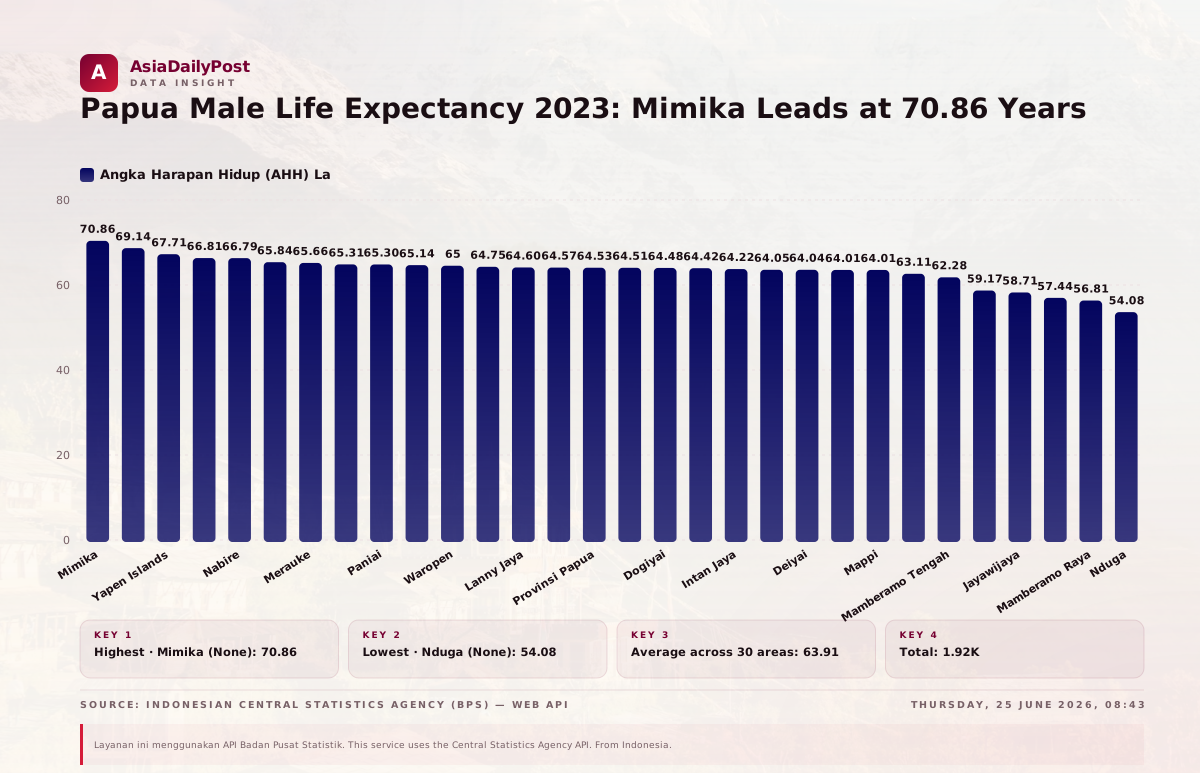
In Papua, the latest available data on male life expectancy from the Central Statistics Agency (BPS) for 2023 reveals a 16.78-year chasm between the province's most and least advantaged regencies. Mimika recorded the highest figure at 70.86 years, while Nduga, deep in the highlands, posted just 54.08 years.
The Urban Advantage: Mimika and Jayapura City
Mimika, where the Grasberg mining complex fuels economic activity, was followed by Jayapura City with 69.14 years and the Yapen Islands at 67.71 years. These areas share easier access to hospitals, better sanitation, and more diverse livelihoods. Even lower-ranked coastal regencies like Biak Numfor (66.81) and Nabire (66.79) remained comfortably above the provincial average, likely reflecting the concentration of health infrastructure along the coast.
A Wide Pack of Mid-Ranked Regencies
Between those outliers, a dense cluster of 20 regencies fell within a narrow band from 63.11 to 66.79 years. This suggests that many of Papua's interior districts face similar structural hurdles — limited transport, understaffed clinics, and high maternal malnutrition — even if their ranking differs by a few spots. Their tightly bunched numbers indicate that incremental improvements in just one or two areas could shift relative positions.
The Bottom: Nduga, Mamberamo Raya, and Asmat
Nduga's 54.08 years sits far below the provincial average of 63.91, followed by Mamberamo Raya (56.81) and Asmat (57.44). All three share extreme geographic isolation, chronic conflict sensitivity, and a near-total absence of reliable emergency care. A man born in Nduga can expect to live nearly 17 fewer years than one in Mimika — a gap more commonly seen between countries, not within a single administrative unit.
- Highest: Mimika — 70.86 years
- Lowest: Nduga — 54.08 years
- Provincial average: 63.91 years across 30 regencies
- Gap from top to bottom: 16.78 years
The sharp divide highlights the uneven reach of development in Papua. While mining revenues and administrative centres have lifted some areas, vast swaths of highland and border territory remain disconnected from the services that make a longer life possible. For any future planning, these figures serve as more than statistics — they are a snapshot of the distance Papua still has to travel to close its internal health gap.
Source: Indonesian Central Statistics Agency (BPS) — Web API · Thursday, 25 June 2026, 08:43