Portal Site of Official Statistics of Japan website (https://www.e-stat.go.jp/). from Japan
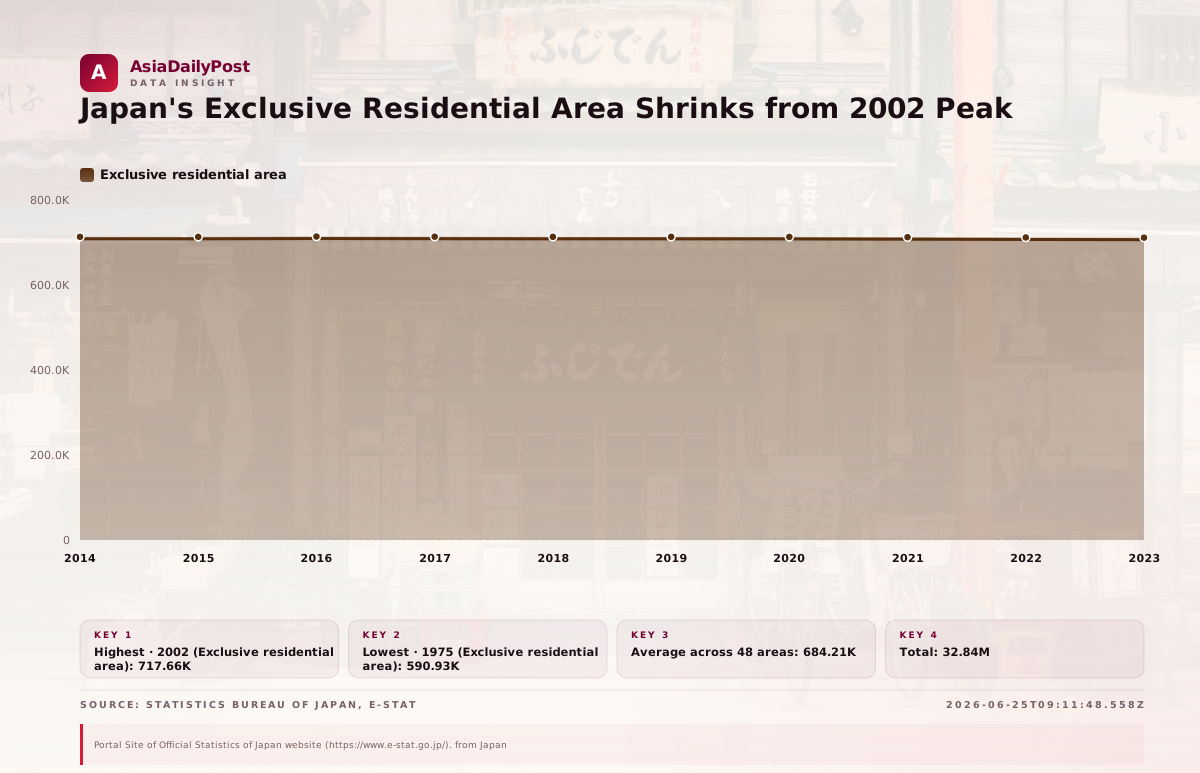
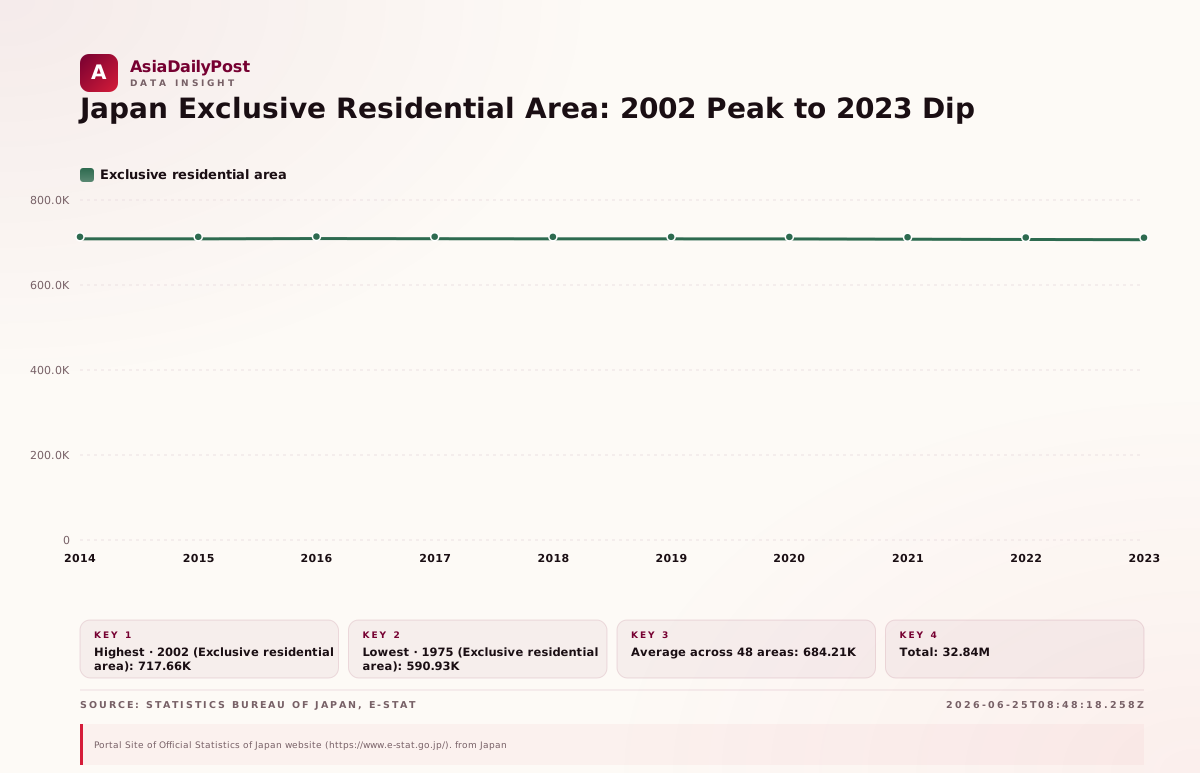
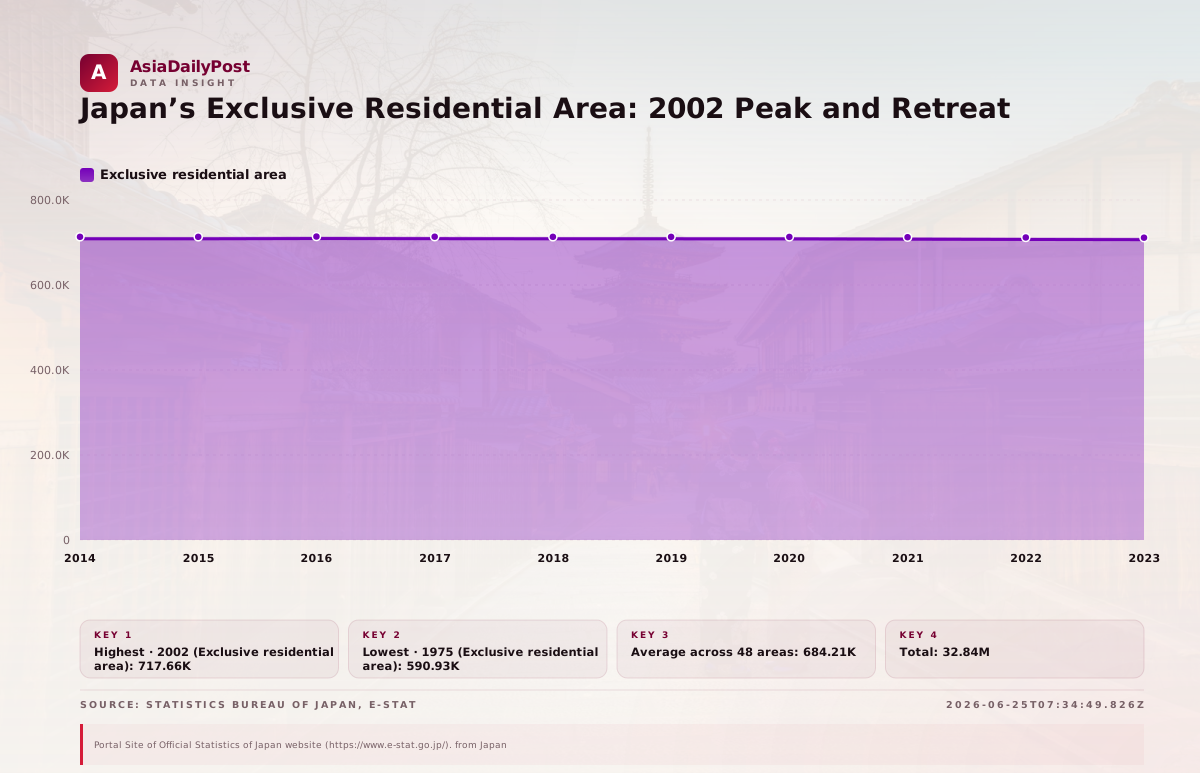
Japan’s exclusive residential land area—which the Statistics Bureau defines as land used strictly for housing, excluding mixed-use zones—reached an all-time high of 717,659 hectares in 2002, according to the System of Social and Demographic Statistics. Over the following 21 years, that figure dipped by a modest 6,339 ha, finishing at 711,321 ha in 2023. The dataset, spanning 48 annual observations from 1975 to 2023 (with no data point for 1995), shows a gradual expansion from 590,933 ha in 1975 to the early-2000s peak, then an extended, gentle plateau.
A peak that wasn’t a bubble The increase from the mid-1970s mirrors Japan’s rapid urbanization and rising homeownership during the high-growth and bubble eras. By 1990, exclusive residential area had already grown to 666,580 ha. The 2002 peak occurred well after the asset bubble burst, a time when many households may have completed long-planned moves to single-family homes in suburbs. From that point onward, the aggregate footprint expanded only marginally, then began a barely perceptible decline.
Plateauing in the 21st century Between 2000 (715,486 ha) and 2020 (713,101 ha), the total area moved within a band of less than 3,000 ha—a striking level of stagnation for a country that once seemed to be in a perpetual building cycle. The 2023 figure of 711,321 ha is still 19,210 ha above the 1996 level, so the country hasn’t shed its residential footprint, but the direction has tilted downward.
What the numbers likely reflect The post-peak decline coincides with Japan’s demographic turning point. The population began shrinking after 2008, and the number of households started to edge down from the mid-2010s. Fewer new households mean less demand for new residential plots, and some older housing stock may be reverting to other uses or simply being consolidated. The data does not distinguish between new dwellings and demolished ones, but the net change suggests that the country is no longer adding residential land on a national scale—and may be quietly retiring parcels in depopulating rural areas. Urban planning shifts may also play a role. Policies encouraging compact city development and the conversion of underused residential land in city centers into higher-density mixed-use projects could slowly chip away at the total exclusive residential area. At the same time, extreme weather events and the growing number of vacant homes (akiya) might lead to some land being taken out of residential classification.
Key takeaways
The all-time high of 717,659 ha in 2002 stands just 0.9% above the level in 2000, indicating the peak was more of a gentle crest than a sharp spike. - The lowest reading remains the first observation: 590,933 ha in 1975. - Over the full 48-year span, the average annually observed exclusive residential area was approximately 684,213 ha, and the total sum across all years is 32.8 million ha (a statistical artifact of summing yearly snapshots). The data, published by the Statistics Bureau of Japan and accessed via the e-Stat portal, provides a rare long-run look at how the physical shape of Japan’s housing landscape has evolved—and how demographic gravity is now pulling it back, hectare by hectare.
Source: Statistics Bureau of Japan, e-Stat · 2026-06-25T07:34:49.826Z