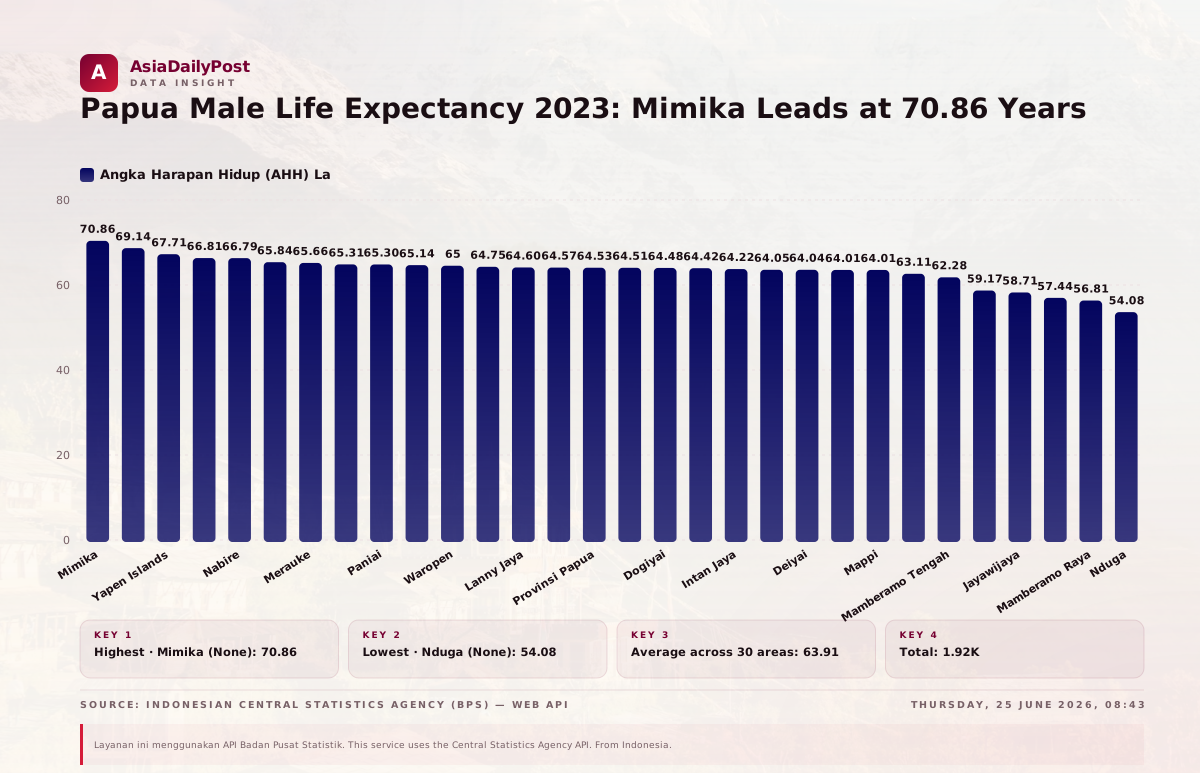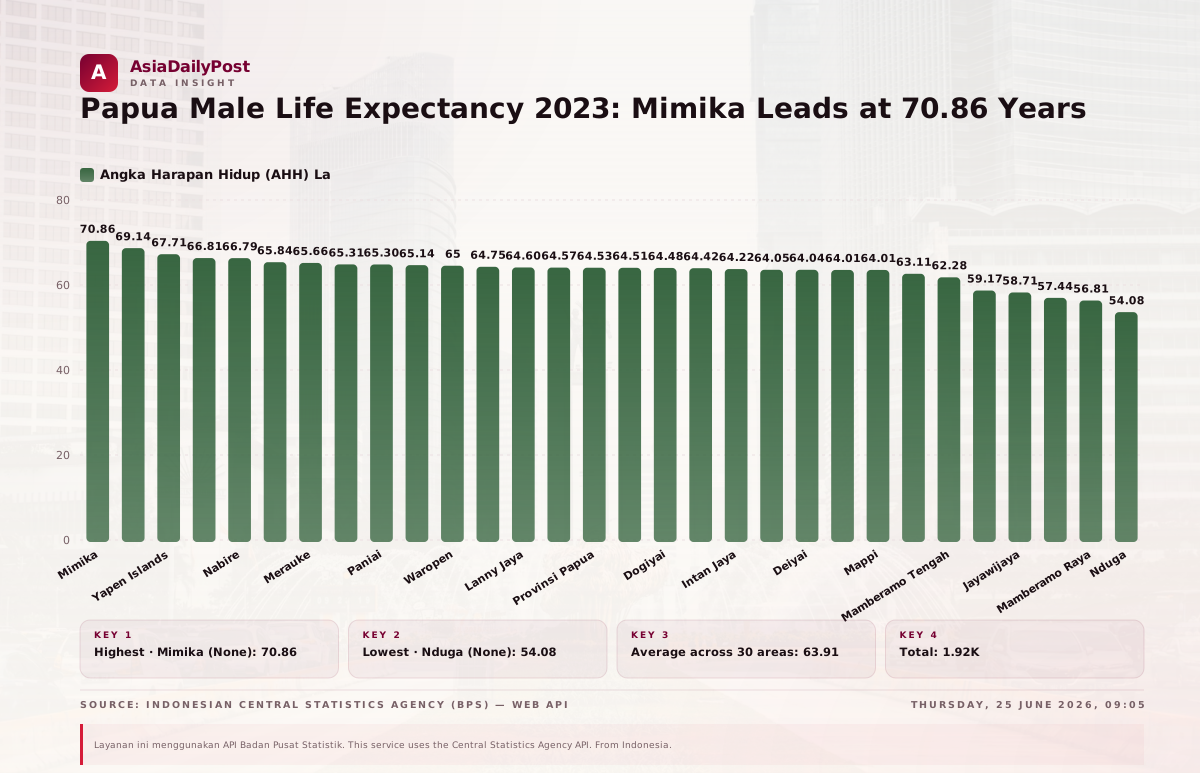
Life expectancy figures at the provincial level often mask deep inequalities that only become visible when disaggregated by regency or city. Papua's 2023 data on male life expectancy from the Central Statistics Agency (BPS) provides a stark reminder: a provincial average can conceal differences of nearly two decades between administrative units sharing the same provincial health budget.
What the numbers show
At the top, Mimika — the mining-driven regency around Timika — posted 70.86 years. At the bottom, the highland regency of Nduga recorded just 54.08 years, a gap of 16.78 years. The next best performers were Jayapura City (69.14) and the Yapen Islands (67.71), both coastal or urban centres with better healthcare infrastructure.
The mid-table cluster tells a subtler story
Nearly two-thirds of the 30 regencies fell between 63 and 67 years, a tight band that suggests many interior districts face similar structural constraints. For instance, Sarmi (65.14) and Waropen (65.00) show nearly identical outcomes despite different geographies, pointing to shared bottlenecks in healthcare access. Notably, Puncak Jaya and Mappi both recorded identical values of 64.01 years, while a group of half a dozen regencies — including Deiyai and Puncak — were separated by only a few months of life expectancy. This clustering implies that small improvements in a single health input could reorder the mid-table, but large gaps at the extremes are stickier.
The provincial spread is the real headline
Papua's provincial average of 63.91 years is hardly informative on its own. The 16.78-year spread between Mimika and Nduga is wider than the gap between many countries, and the average is pulled down by a handful of extremely low values — Mamberamo Raya (56.81), Asmat (57.44), and others below 60 years. Even the middle cluster remains below Indonesia's overall male life expectancy, reflecting systemic health deficits rather than a few isolated laggards.
- Mimika's 70.86 years is nearly 7 years above the provincial average.
- Nduga's 54.08 years is the lowest among 30 regencies.
- The provincial average sits at 63.91 years, with a 16.78-year gap between top and bottom.
- More than half the regencies cluster between 63 and 67 years, a narrow range that highlights shared development challenges.
For health planners and local governments in Papua, these numbers are not just statistical artifacts. The real challenge lies not in nudging the provincial average upward by a few decimal points, but in reaching the least accessible regencies — places like Nduga and Asmat — where even basic healthcare remains a daily struggle. Until that gap narrows, the province's overall life expectancy will continue to tell an incomplete story.
Source: Indonesian Central Statistics Agency (BPS) — Web API · Thursday, 25 June 2026, 09:05