For almost fifty years, Japan's social welfare administrators have tracked the number of physically disabled persons holding official certificates—a dataset that doubles as a demographic barometer. The Statistics Bureau's annual tally, stretching from 1975 to 2023, records not just prevalence but the interplay of aging, policy, and recognition of disability.
A rising curve that reversed after 2013
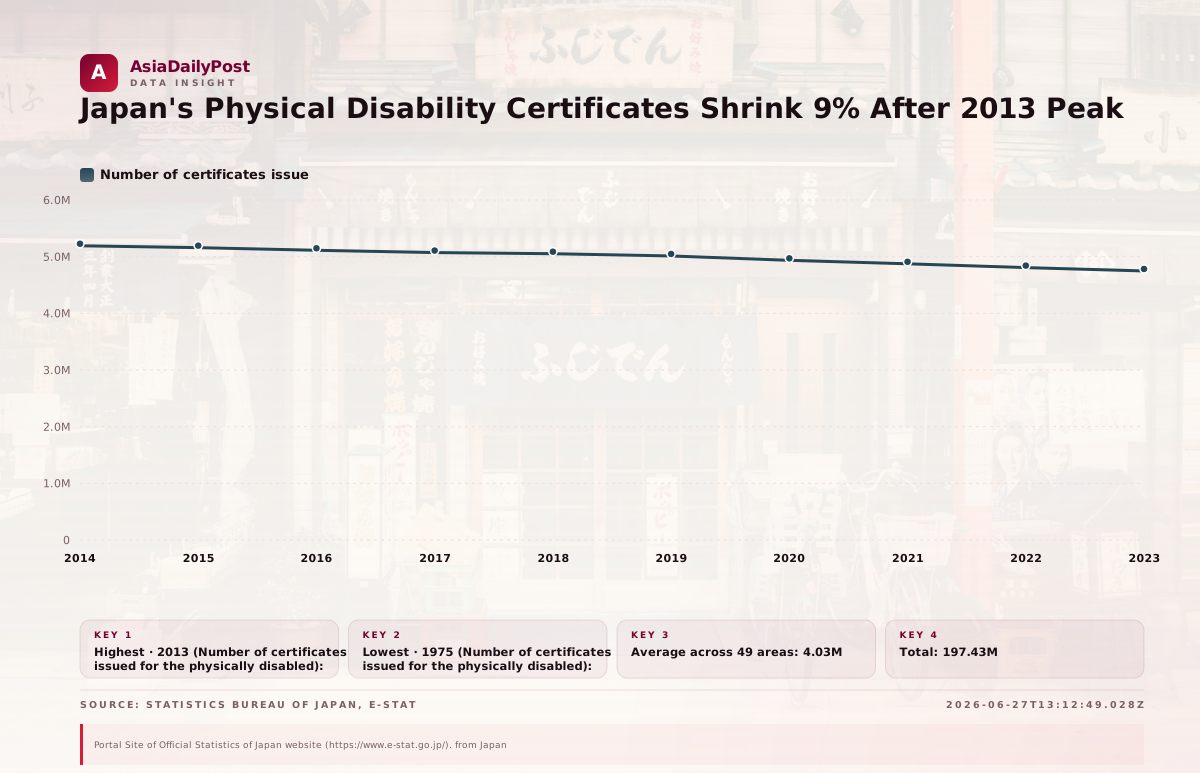
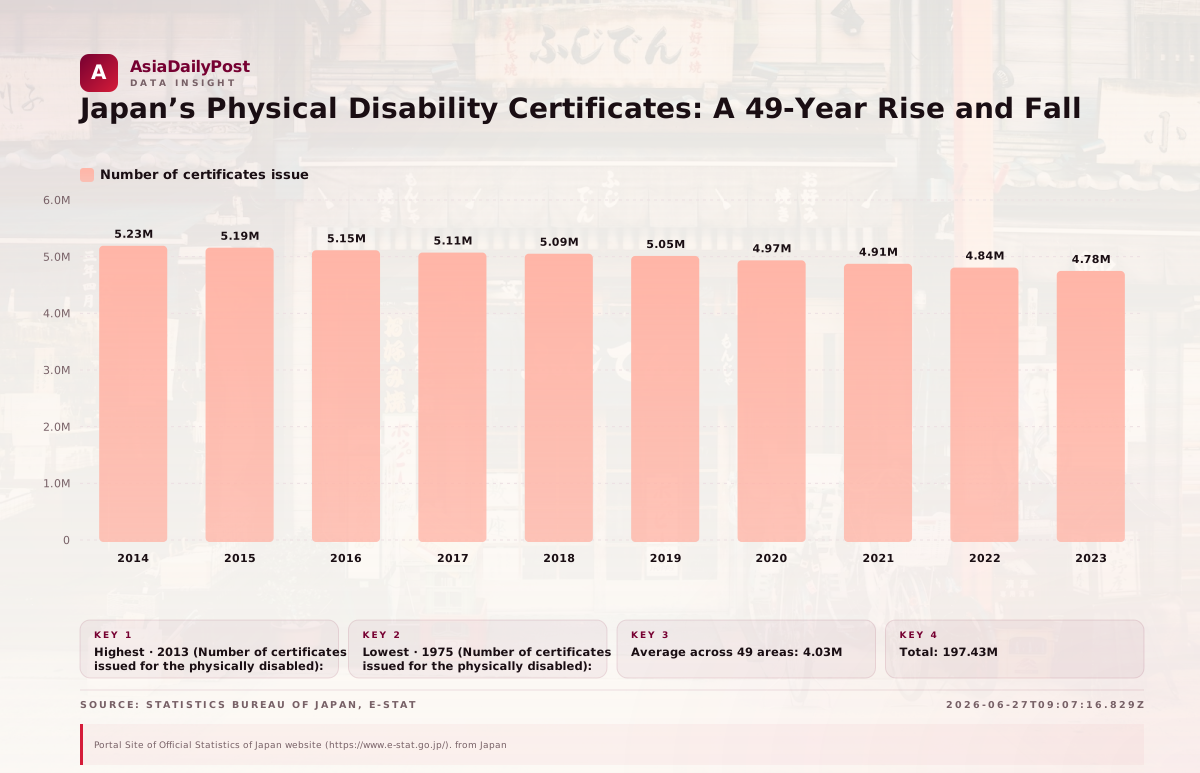
The total climbed from 2,132,043 in 1975 to a peak of 5,252,242 in 2013, a 124 percent increase. By 2023, however, the number had slipped to 4,783,069, down nearly half a million from the apex. The average annual figure across all 49 years sat at roughly 4,029,092 persons.
The plateau before the fall
Growth decelerated markedly in the early 2010s; the 2013 record was only marginally above the 2012 count of 5,231,570. After 2013, the decline became persistent—annual drops averaged about 1 percent, slowly erasing growth that had accumulated over the previous decade.
What a decade of decline means for welfare planning
By 2023, the certificate count had retreated to roughly its 2010 level, effectively wiping out thirteen years of net expansion. The gentle but consistent slide likely reflects the passing of older certificate holders and, possibly, tighter re-certification processes. While the total remains well above the 1975 baseline, the post-peak trajectory signals a shift in the profile of Japan's physically disabled population.
- The 2013 peak of 5.25 million certificates was never matched in any subsequent year.
- From 1975 to 2023, all net growth occurred before 2014; after that, the series only fell.
- The 2023 figure remains more than double the 1975 starting point of 2.13 million.
- Annual declines after 2013 averaged roughly 50,000 persons, a steady but manageable pace.
As Japan's super-aged society evolves, the gradual decline in certificate holders paradoxically highlights the long-term success of earlier recognition efforts—and the continuing need to adapt support systems for a generation whose numbers are now fading. The data serves as a stark reminder that even well-entrenched welfare indicators can reverse, requiring policymakers to plan not only for expansion but also for contraction.
Source: Statistics Bureau of Japan, e-Stat · 2026-06-27T09:07:16.829Z