Contains information from "Internet Connection at Home by Type" accessed on 25 June 2026 from Info-communications Media Development Authority (data.gov.sg (Singapore Department of Statistics)) which is made available under the terms of the Singapore Open Data Licence version 1.0 (https://beta.data.gov.sg/open-data-licence). from Singapore
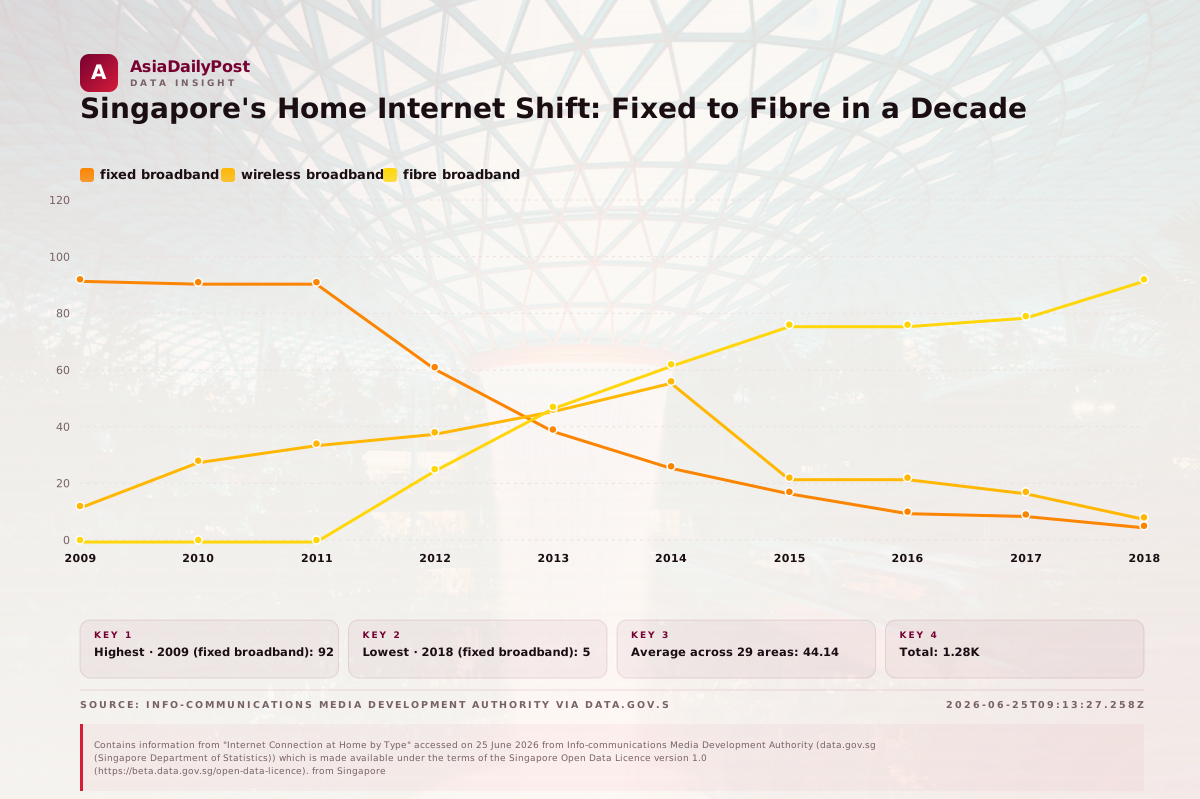
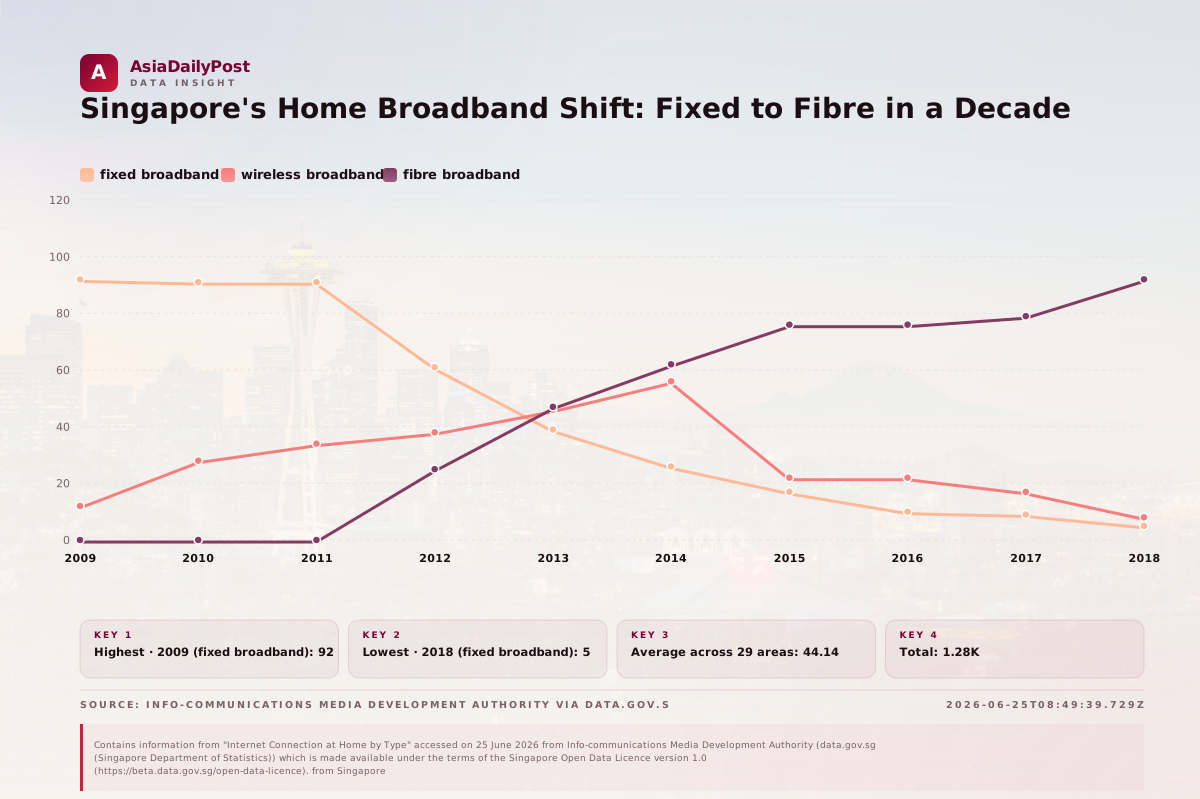
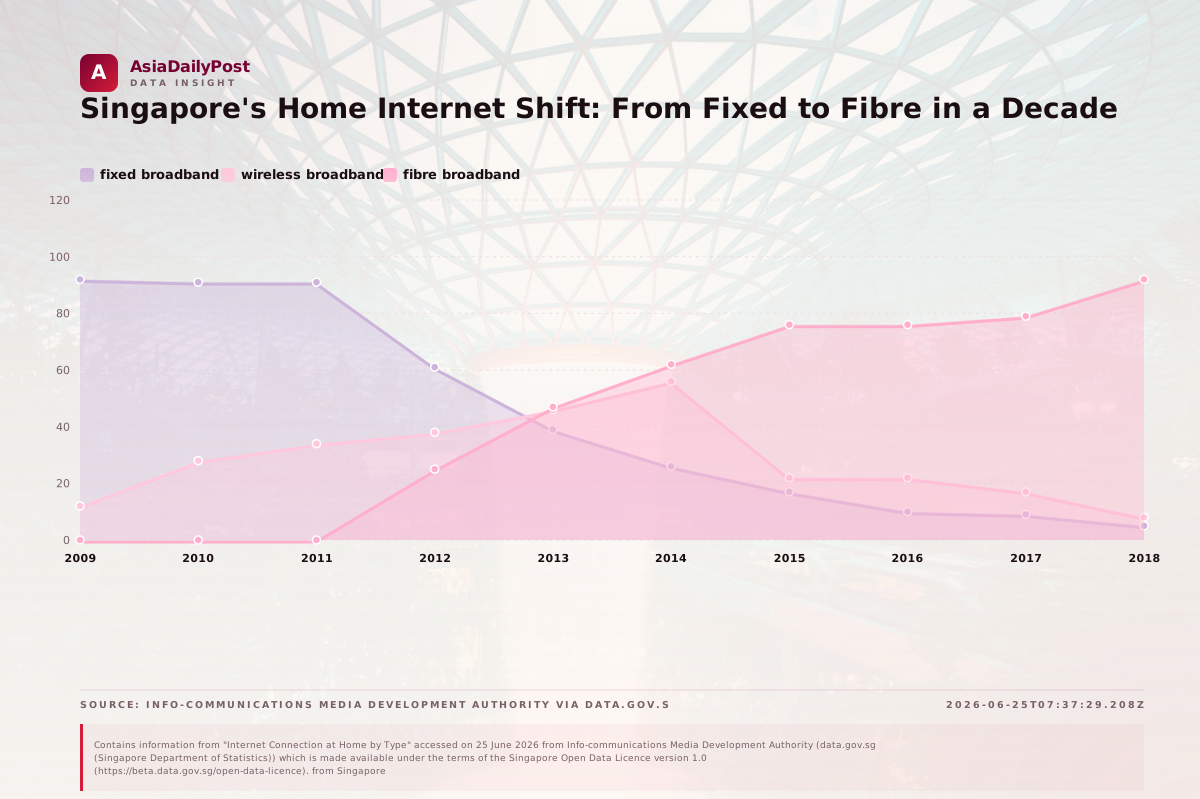
A Decade of Digital Transformation In the space of just ten years, Singapore completely rewired how its households connect to the internet. Data published by the Info-communications Media Development Authority on the country's open data portal tracks the percentage of resident households using three connection types: fixed broadband (traditional DSL or cable), wireless broadband (mobile networks), and fibre broadband. The numbers paint a story of extraordinarily rapid infrastructure change. The Rise of Fibre, the Fall of Fixed Fixed broadband was nearly universal in the late 2000s, hitting a high of 92% of households in 2009. But its decline was precipitous. By 2011, the figure had fallen to 61%, and it never recovered — sinking to just 5% by 2018. Fueling this collapse was fibre. From zero adoption in 2011, fibre broadband reached 25% in 2012, then 62% by 2014, and 92% by 2018. That means the dominant home internet technology flipped almost completely in six years, a tempo rarely seen in national infrastructure projects.
Wireless Broadband’s Peak and Retreat Wireless broadband followed a different trajectory. Its share grew from 8% in 2008 to a peak of 56% in 2014, likely as 3G and 4G mobile data plans became more affordable and capable. But as fibre became the standard for heavy home usage — streaming, remote work, gaming — households increasingly treated wireless as a backup rather than the primary pipe. By 2018, only 8% of homes reported using wireless broadband, down sharply from its peak.
What the Trends Reveal The dataset shows overlapping usage: in some years, the three percentages add up to well over 100%, indicating many households maintained multiple connections simultaneously. This is consistent with consumers keeping fixed or wireless links while transitioning to fibre. The rapid fibre ramp-up after 2011 matches the timeline of Singapore's nationwide Next Generation Nationwide Broadband Network, which aimed to deliver fibre to every home and business. Policymakers and operators executed one of the world's fastest copper-to-fibre migrations, but the data also highlights how abruptly legacy infrastructure can become obsolete when a government-led push aligns with clear consumer benefits. For everyday Singaporeans, the result is a near-universal fibre backbone that now supports everything from telemedicine to smart home devices — a digital foundation built in barely a decade.
Source: Info-communications Media Development Authority via data.gov.sg · 2026-06-25T07:37:29.208Z