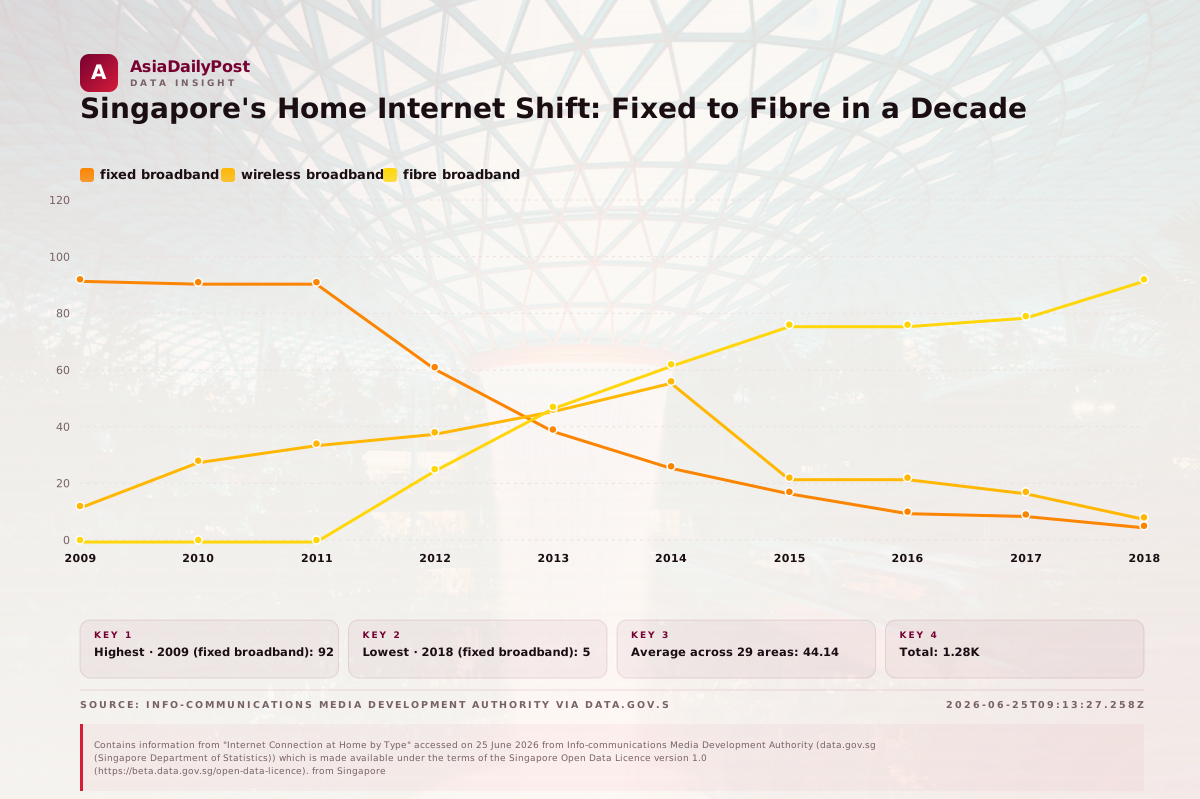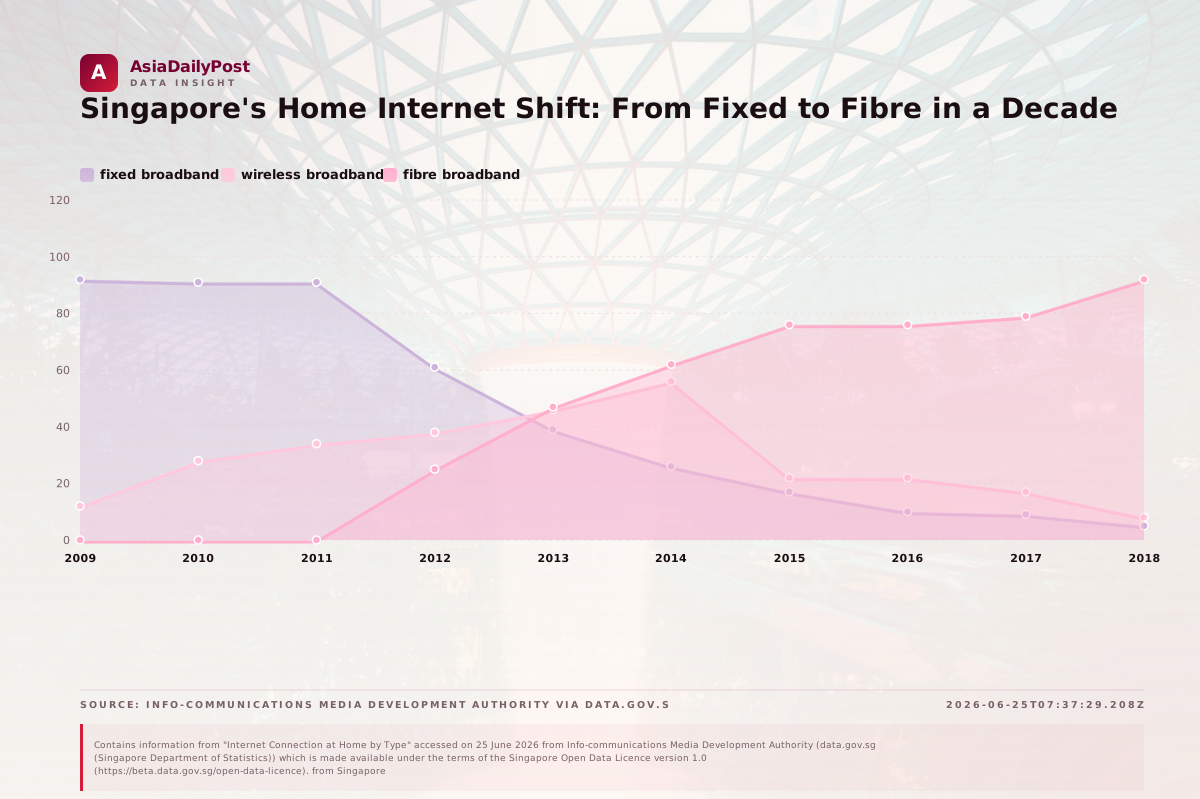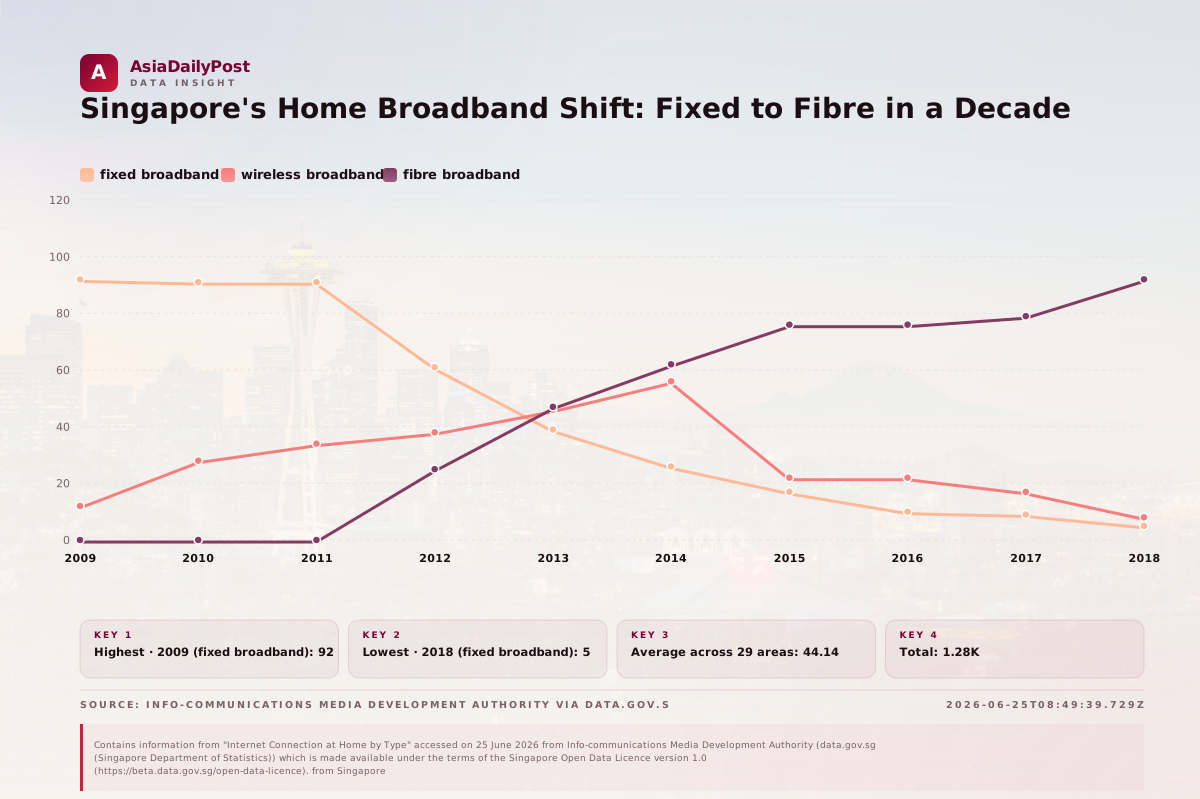
Between 2008 and 2018, Singapore's home internet connections underwent a dramatic transformation. Data from the Info-communications Media Development Authority shows that fixed broadband fell from 92% of households in 2009 to just 5% in 2018, while fibre broadband — virtually non-existent before 2012 — reached 92% adoption by the end of the period.
Fixed broadband's near-total collapse
Fixed connections, which once powered the city-state's internet, dominated in the late 2000s. In 2009, 92% of households relied on DSL or cable. By 2011 the figure had slipped to 61%, and the slide accelerated: 26% in 2014, then 5% in 2018. The 87-point drop over a decade reflects a wholesale infrastructural switch rather than gradual consumer choice.
A faster, future-proof alternative
The driver of that collapse was fibre. Singapore's nationwide fibre network, rolling out from the early 2010s, offered speeds that fixed broadband could not match. Households moved swiftly: fibre adoption hit 25% in 2012, 62% in 2014, and 92% in 2018. This is one of the fastest copper-to-fibre transitions recorded globally, achieved in roughly six years.
Wireless broadband's rise and retreat
Wireless broadband peaked at 56% of homes in 2014, up from just 8% in 2008. The surge coincided with the rollout of 3G and 4G mobile networks, which gave households a viable alternative to fixed lines. But as fibre became the primary pipe for streaming, remote work and gaming, wireless lost its grip. By 2018, only 8% of homes used wireless broadband, down sharply from its high-water mark.
- Highest fixed broadband: 92% in 2009
- Lowest fixed broadband: 5% in 2018
- Fibre adoption: 0% before 2012, 92% by 2018
- Wireless peak: 56% in 2014, falling to 8% in 2018
In several years, the sum of connection types exceeded 100% — reaching 132% in 2013 — indicating that many households maintained multiple connections while transitioning. The data captures one of the world's most decisive broadband modernizations, leaving a near-universal fibre backbone that now supports everything from smart devices to telemedicine.
Source: Info-communications Media Development Authority via data.gov.sg · 2026-06-25T08:49:39.729Z