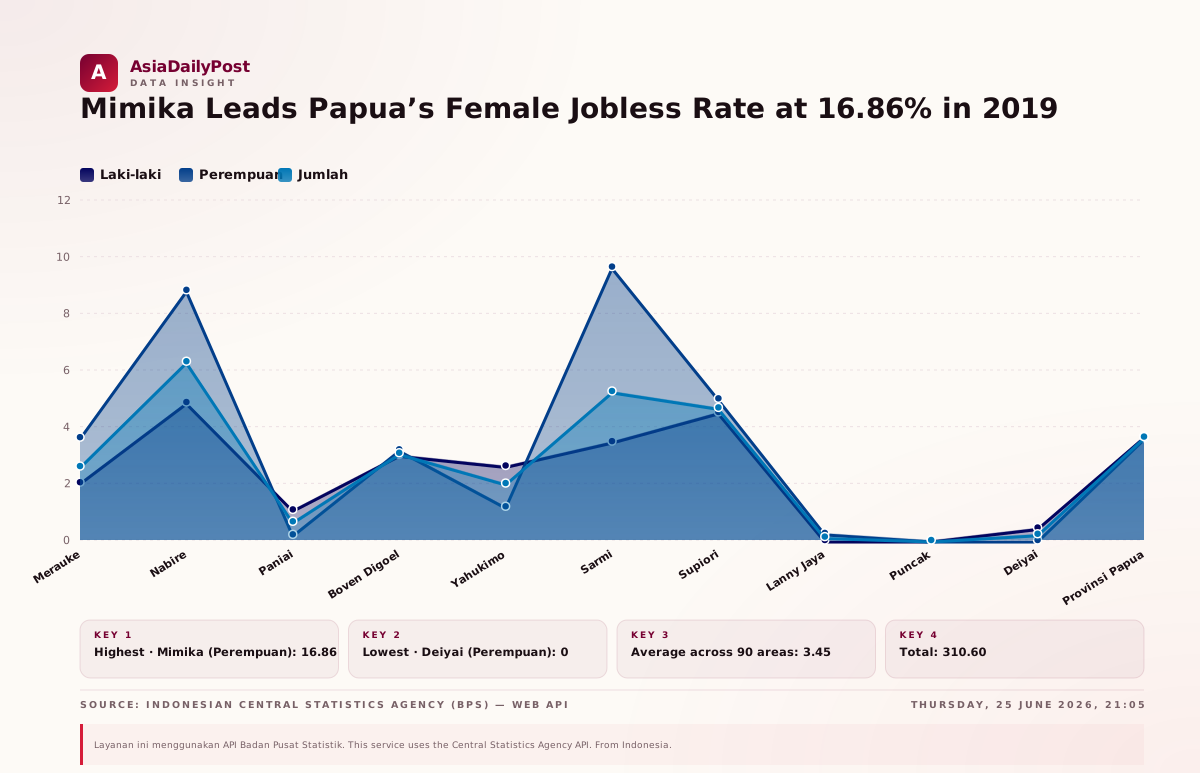
Papua’s open unemployment landscape in 2019 was split between a cluster of regencies reporting sharply elevated female jobless rates and a much larger group where the figure hovered near—or at—zero. BPS data covering 90 gender-specific measurements across the province’s regencies and city shows Mimika sitting at the top with 16.86 percent for women, more than ten times the provincial average of 3.45 percent.
Mimika and Jayapura dominate the female unemployment figures
Mimika’s female open unemployment rate of 16.86 percent is the highest in the dataset, followed closely by Jayapura regency at 15.68 percent and Jayapura City at 14.89 percent. In contrast, the male rates in these same areas were markedly lower: Mimika’s male unemployment stood at 4.73 percent, Jayapura regency at 6.3 percent, and Jayapura City at 11.03 percent. This gender gap — with women facing roughly three to four times the jobless rate of men in the province’s most urbanised and resource-rich pockets — suggests that economic activity in mining and government service centres has not absorbed female jobseekers at the same pace.
The 3.45 percent provincial average obscures the wide dispersion. Only a handful of areas pull the average upward, while most regencies cluster well below two percent. Jayapura’s combined unemployment rate of 9.68 percent and Biak Numfor’s 10.42 percent underscore that the province’s labour market is relatively tight outside the main economic gateways.
Zero-percent figures reflect limited formal labour markets
At the other end, Deiyai reported zero percent unemployment for women, and Intan Jaya recorded zero for both men and women. Several other highland areas—Puncak, Lanny Jaya, and Dogiyai—also posted vanishingly small figures. These readings are less a sign of full employment than an indicator of deeply informal labour structures. In regencies where subsistence agriculture and smallholder farming dominate and formal wage opportunities are scarce, open unemployment as measured by the labour force survey barely registers.
The dataset’s 90 data points—three gender categories across 29 sub-provincial areas plus the provincial aggregate—paint a picture of two Papuas. A coastal arc from Mimika through Jayapura City generates visible unemployment, while the interior and some southern regencies display rates that would be negative if not for the zero floor. The combined effect leaves the province’s headline figure at a modest 3.65 percent for the total population.
Seven years on, the 2019 numbers remain a useful snapshot of a labour market still shaped by geography and sectoral concentration, reminding policymakers that province-wide averages often hide stark local realities.
Source: Indonesian Central Statistics Agency (BPS) — Web API · Thursday, 25 June 2026, 21:05