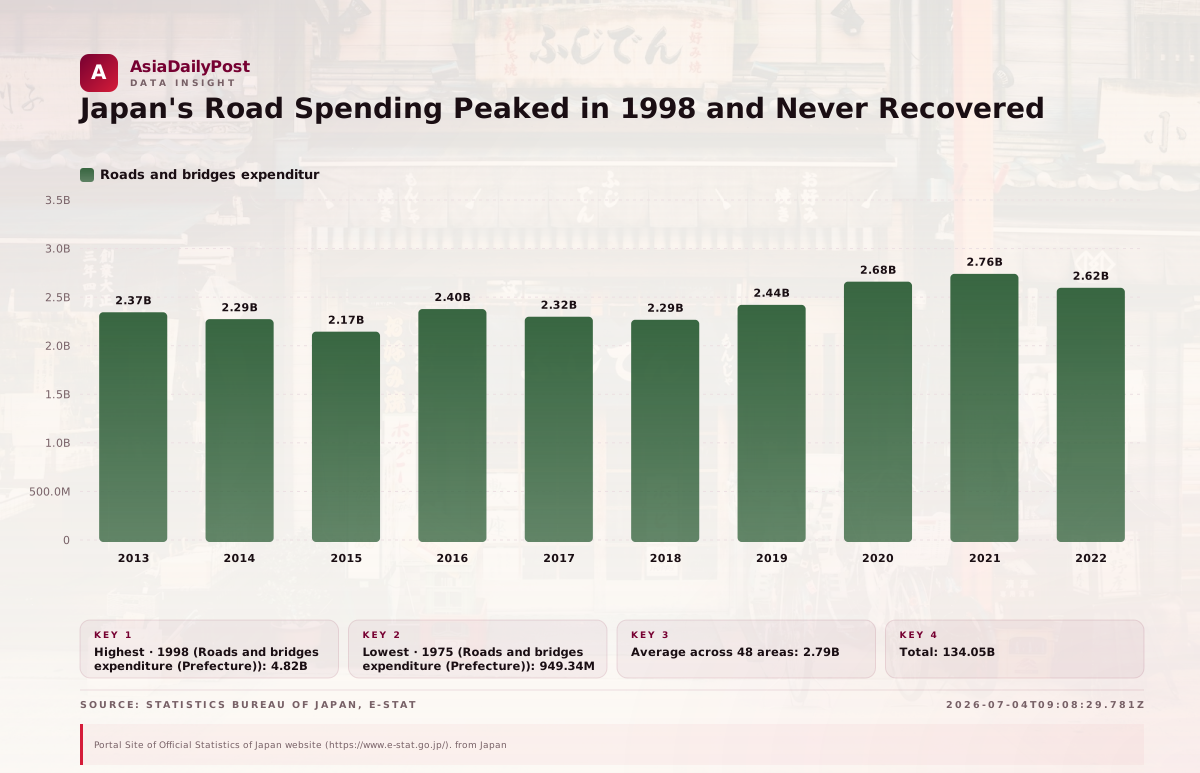
Japan’s prefectural governments spent ¥2.62 trillion on roads and bridges in 2022—roughly half the ¥4.82 trillion peak recorded in 1998, according to data from the Statistics Bureau of Japan.
Key findings
- All-time high: Expenditure topped ¥4.82 trillion in 1998, the apex of a decade-long building boom.
- Lowest point: The series starts at just ¥949 billion in 1975, highlighting a fivefold expansion over 23 years.
- 2022 level: Spending landed at ¥2.62 trillion, up from pandemic-era lows but still 46% below the peak.
- Total outlay: Over 48 years, prefectures spent a combined ¥134 trillion on roads and bridges.
- Long-run average: The annual mean of ¥2.79 trillion sits above current spending, indicating structural decline.
What three decades of decline look like
After the 1998 peak, prefectural road budgets entered a long downward slide. The early 2000s saw cuts as the government trimmed public works, and the global financial crisis brought only a modest and short-lived recovery. Even a pandemic-era stimulus push in 2020–2021 lifted spending by less than 10%, leaving it far below the bubble-era heights.
The data points to a broader story: Japan’s shrinking population and fiscal pressures have permanently reduced the appetite for large-scale road building. The maintenance backlog, however, may be growing silently behind the numbers.
For local planners, the chart is a reminder that the era of ever-rising construction budgets ended with the 20th century. The question now is whether current spending levels can keep existing infrastructure safe.
Source: Statistics Bureau of Japan, e-Stat · 2026-07-04T09:08:29.781Z