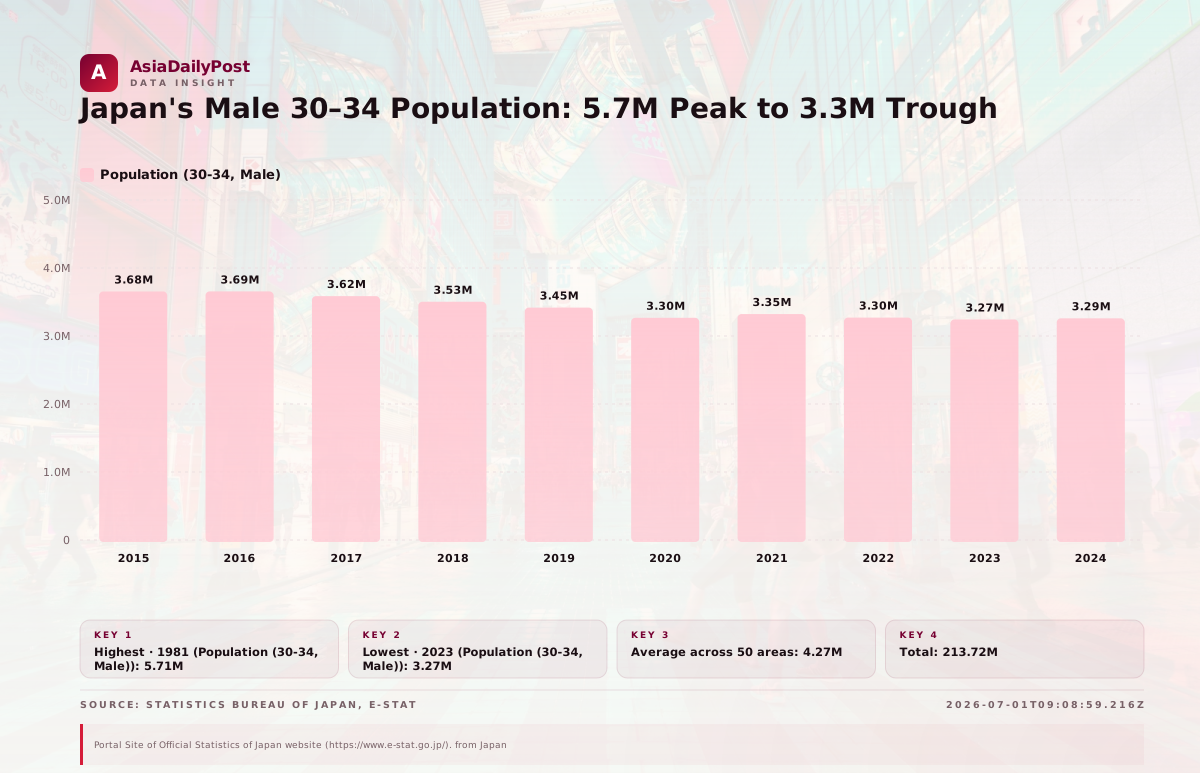
Japan’s male 30–34 age group peaked at 5.71 million in 1981 and hit a low of 3.27 million in 2023, a contraction of 43%. A small uptick to 3.29 million in 2024 did little to reverse the long-term slide, e-Stat data shows.
Key findings
- Highest point: 1981 recorded the maximum count of 5,712,000 men aged 30–34.
- Lowest point: The series bottomed at 3,273,000 in 2023.
- Decades of decline: The cohort shrank by 2.44 million from peak to trough.
- Long-run average: The 50-year mean stood at roughly 4.27 million.
- 2024 stabilisation: A modest bump of 16,000 from 2023 halted the consecutive fall, but levels remain near historic lows.
How a single age bracket tracks national fertility trends
The peak in 1981 corresponds to the generation born during Japan's first baby boom (1947–1949) entering their early 30s. As those large cohorts moved into older brackets, and smaller generations followed from the 1970s onward, the count of 30–34-year-old men fell almost without interruption.
The slight increase in 2024 might reflect a small echo effect or a data revision, but the overall trend remains unmistakable. For policymakers, the shrinking pool of men in their early thirties signals a continued decline in prime-age workers and potential fathers, with implications for Japan’s labour force and fertility rates.
After fifty years, the male 30–34 population stands roughly 29% below its 1975 level. While the 2024 uptick breaks the downward streak, the data underscores just how deeply Japan's demographic contours have been redrawn.
Source: Statistics Bureau of Japan, e-Stat · 2026-07-01T09:08:59.216Z