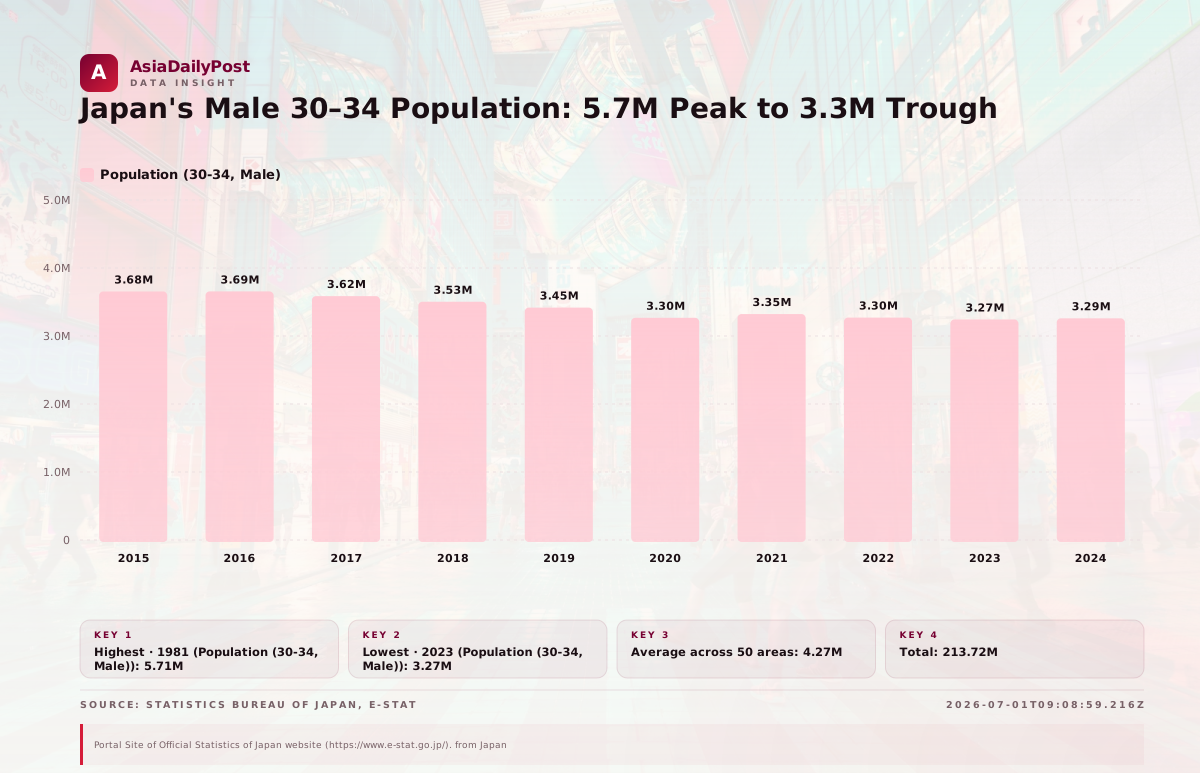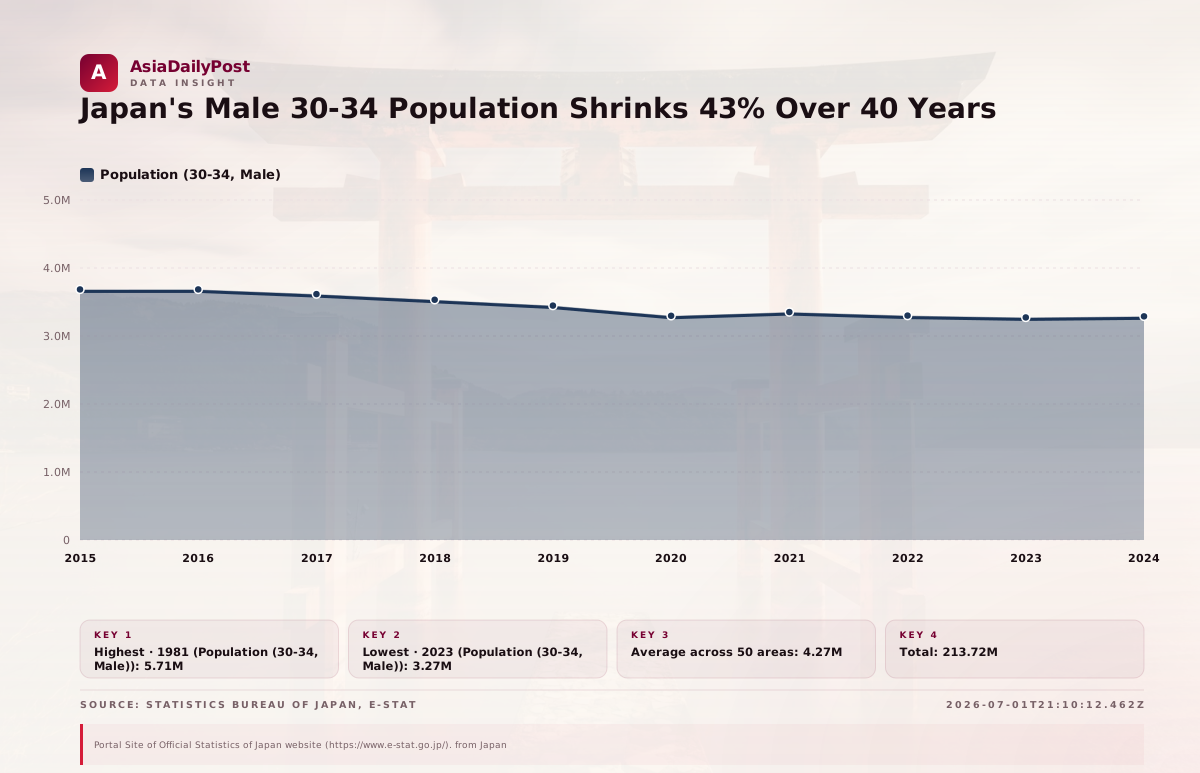
In 1981, when Japan's economy was the envy of the world, 5.71 million men were in their early thirties—old enough to be building careers and families. By 2023, that figure had collapsed to 3.27 million, a loss of nearly 2.5 million men from a single age bracket. The 2024 number barely budged, inching up to 3.29 million, according to the Statistics Bureau's e-Stat portal.
Key findings
- Historic peak: The male 30–34 cohort topped out at 5,712,000 in 1981.
- Rock bottom: The count fell to just 3,273,000 in 2023, the lowest in half a century.
- Long-run average: The 50-year average sits at 4.27 million, well above today's level.
- Total decline: From peak to trough, the group shrank by 2.44 million, or 43%.
- 2024 uptick: A marginal rise of 16,000 paused the slide but kept the count near historic lows.
What a shrinking prime-age pool means
The 1981 peak lines up with the postwar baby boom generation hitting their early thirties. Those large cohorts then marched into older brackets and were replaced by far smaller generations born after Japan's fertility rate began its long descent in the 1970s. The result is a demographic echo that now leaves the country with barely three men in their early thirties for every five it had four decades ago.
For businesses, that means a shrinking domestic market and a thinner pipeline of mid-career talent. For policymakers, fewer men in this bracket implies a smaller base of potential fathers, further pressuring the birth rate. The modest 2024 recovery—adding just 16,000 individuals—doesn't alter the structural trend; it may reflect a temporary echo from a slightly larger birth cohort entering the bracket.
The question now is whether Japan's demographic curve has finally found a floor, or if the 2024 blip is merely a pause before the next leg down. Either way, the days of 5.7 million men in their prime family-forming years aren't coming back.
Source: Statistics Bureau of Japan, e-Stat · 2026-07-01T21:10:12.462Z