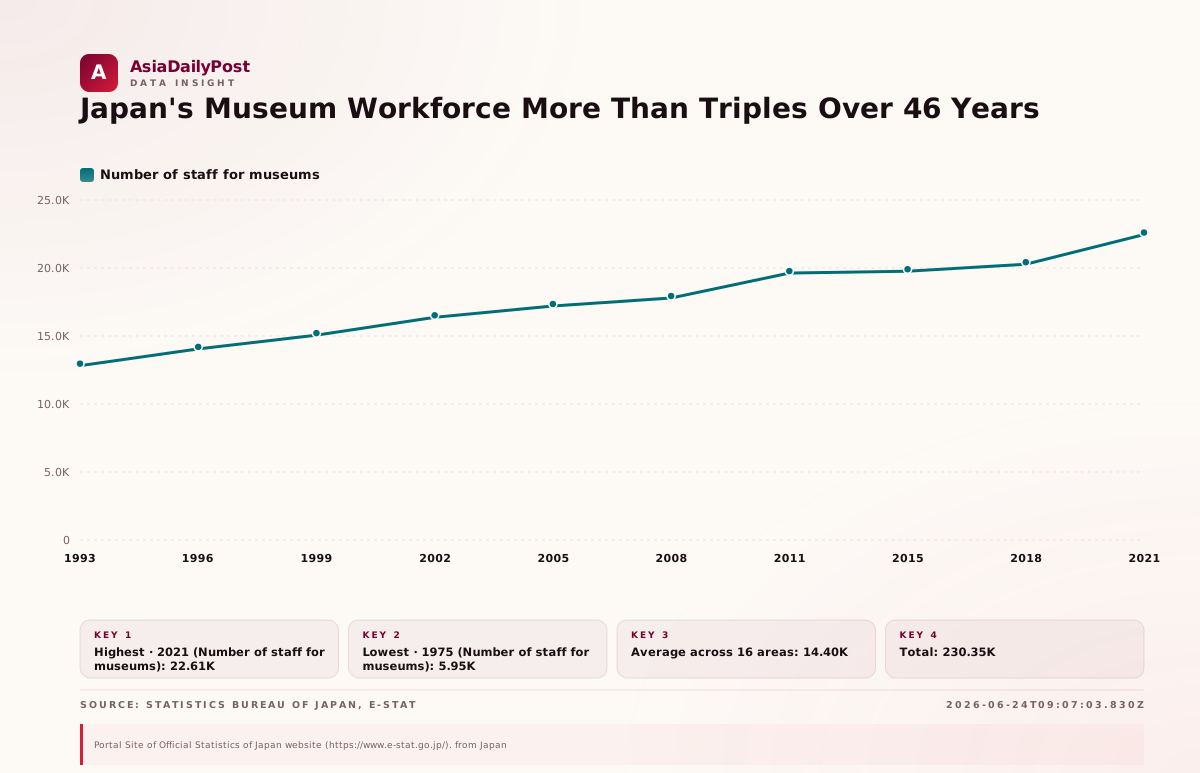
Japan's museum sector employed 22,607 people in 2021, more than triple the 5,946 staff recorded in 1975, according to long-run data from the Statistics Bureau of Japan. The 280 per cent increase over 46 years has been remarkably steady, rising in every recorded period, with the most pronounced jump coming in the decade after 2011.
In the first year of available data, 1975, Japan's museums collectively employed fewer than 6,000 staff. By the end of the 1980s, that number had passed 10,000, likely reflecting a nationwide push to build new cultural facilities during the economic boom. The climb continued through the 1990s and 2000s — reaching 17,354 in 2005 and 19,910 in 2015 — but the pace quickened markedly in the years leading up to the COVID-19 pandemic. Between 2011 and 2021, museum staffing added 2,832 positions, an average of 283 per year compared to around 210 per year over the previous decade.
A cultural economist would note that this growth aligns with Japan's deliberate strategy to position museums as both educational resources and tourism anchors. The run-up to the Tokyo 2020 Olympics spurred infrastructure spending, and even after the pandemic delayed the Games, many institutions continued to expand their educational and digital outreach teams. While headcount alone does not capture visitor experience, the fact that staffing has risen in all 16 data points since 1975 suggests a sector that has consistently expanded its physical footprint and public programming.
With the latest figures now five years old, the next tranche of data will reveal whether the post-pandemic recovery has sustained that staffing momentum or whether tighter government budgets have begun to trim payrolls in the sector.
Source: Statistics Bureau of Japan, e-Stat · 2026-06-24T09:07:03.830Z