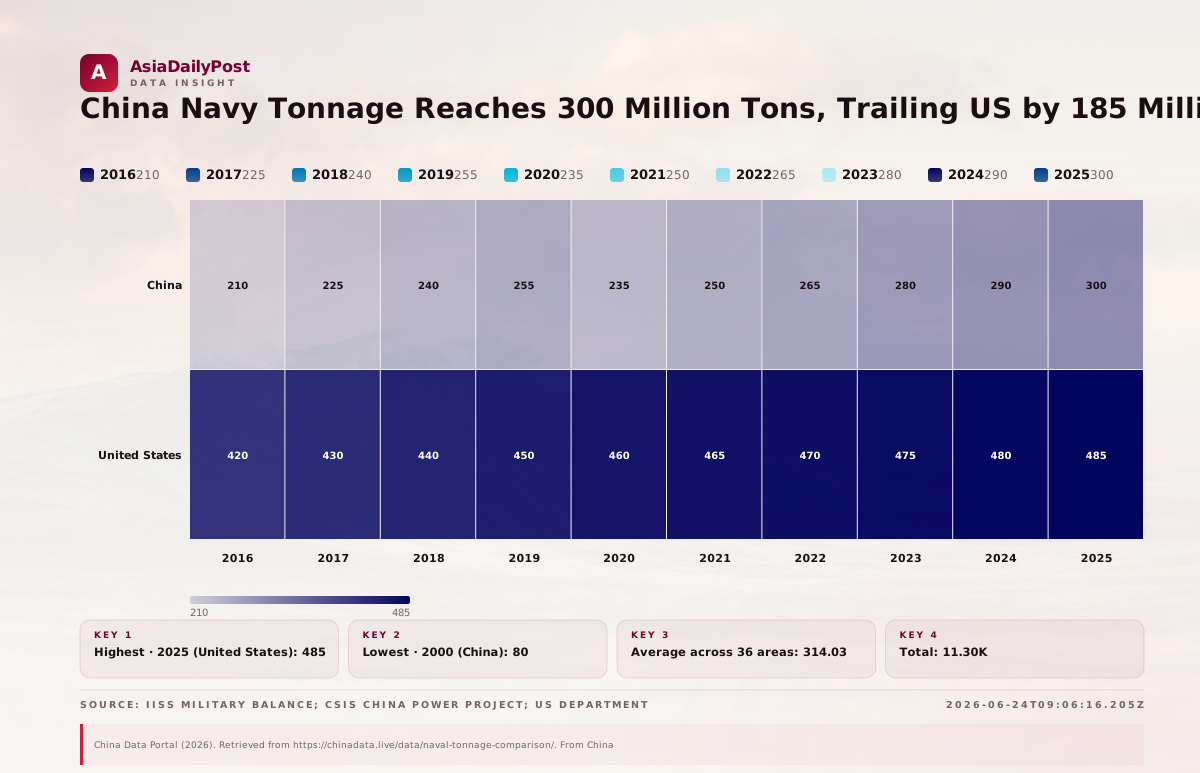
China’s naval fleet displacement crossed 300 million tons for the first time in 2025, according to annual data compiled from IISS Military Balance, CSIS, and US Defense Department reports. The figure is nearly four times the 80 million tons recorded in 2000, a rate of expansion unmatched by any other navy. The United States, by comparison, grew its fleet tonnage from 340 million to 485 million over the same quarter-century, a 43 percent increase. The raw gap between the two fleets has narrowed from 260 million tons in 2000 to 185 million tons in 2025, though the US retains a decisive advantage in aggregate displacement.
China’s growth was not entirely linear. After reaching 255 million tons in 2019, the tonnage dipped to 235 million in 2020 before climbing again to 300 million over the next five years. A one-year contraction of that size likely reflects decommissioning of older hulls or reclassification of auxiliary vessels rather than any strategic reversal. Meanwhile, the US fleet added between 5 and 10 million tons annually throughout the period, with the 2025 figure of 485 million being the highest on record.
The trajectory leaves little doubt that China is closing the tonnage gap faster than most pre-2010 forecasts anticipated. At the current pace, China could draw even in total displacement within the next decade if the US fleet does not accelerate its own expansion. For force planners, the raw tonnage numbers tell only part of the story — fleet composition, vessel age, and power projection capability still favor the US — but the trend in industrial capacity and shipbuilding output continues to tilt eastward.
Source: IISS Military Balance; CSIS China Power Project; US Department of Defense Annual Reports; Chinese Defense White Papers · 2026-06-24T09:06:16.205Z