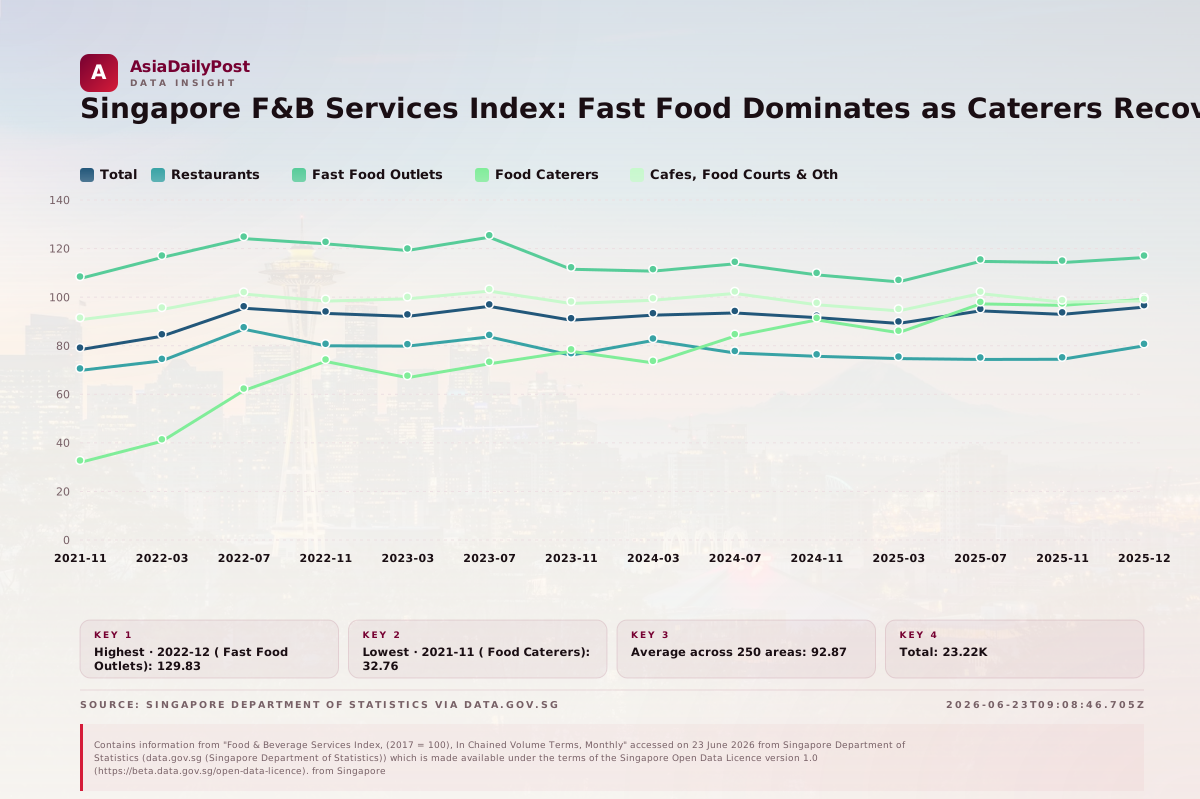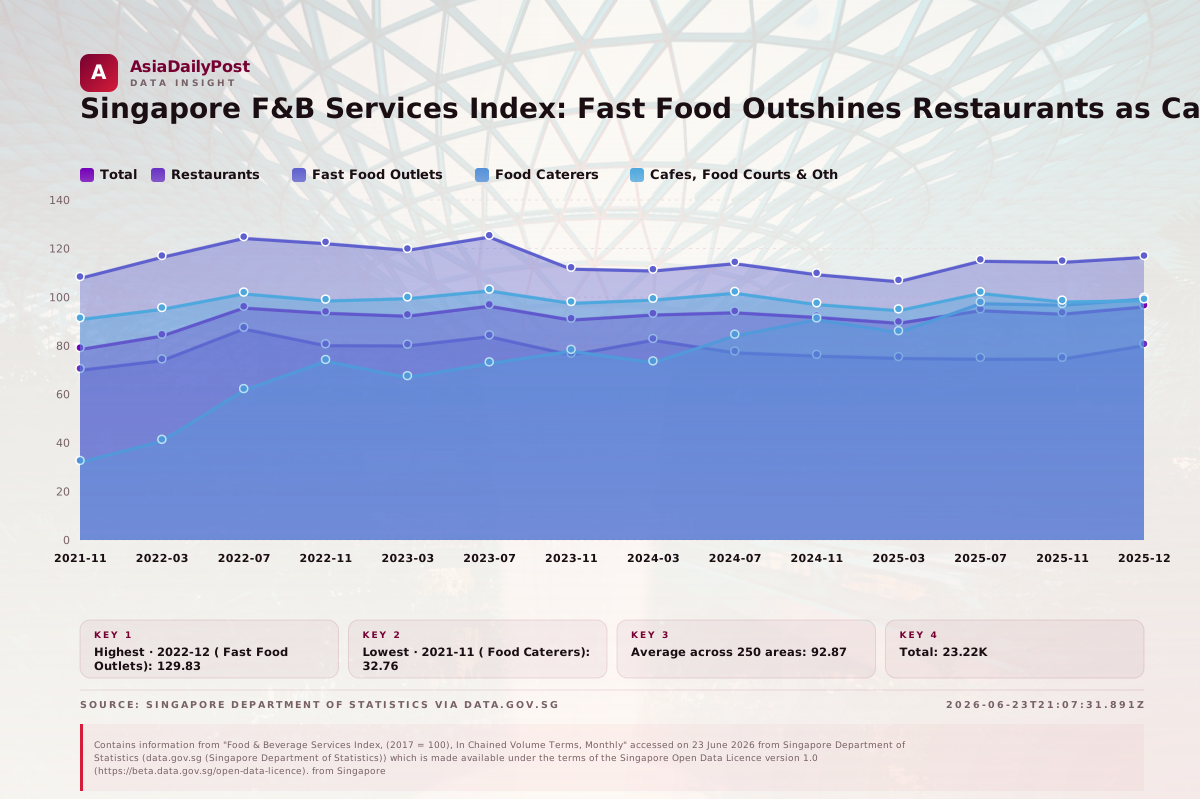
Singapore’s food and beverage sector has charted an uneven path since the pandemic. Data from the Department of Statistics’ monthly index—tracking chained volume against a 2017 baseline of 100—shows that fast food outlets have consistently operated above pre-Covid levels, while full-service restaurants remain stuck below the benchmark.
Fast food was the standout performer. Over the 50 months from November 2021 to December 2025, the quick-service segment stayed above 100 in all but one month, peaking at 129.83 in December 2022. This sustained strength likely reflects a long-term consumer pivot toward takeaway, delivery, and convenience dining that has outlasted the health restrictions that originally spurred it.
Restaurants never regained firm footing. After touching 97.5 in December 2021—the closest they came to full recovery—the index drifted mostly in the 70s and 80s, ending December 2025 at just 80.8. An economist might view this as a sign that tourist-driven and corporate dining demand has yet to return in force. In contrast, cafés, food courts and other eating places held relatively steady, averaging near the 100 mark and peaking at 104.3 in August 2023, though without any breakout growth.
The sharpest trajectory belonged to food caterers. From a nadir of 32.8 in November 2021, when large gatherings were heavily restricted, the segment climbed gradually, crossing 77 by the end of 2022 and reaching 99.96 by December 2025. The near-complete recovery suggests the return of weddings, conferences, and social events that drive bulk food orders.
Overall, the total F&B services index averaged 92.9 over the period—roughly 7 percent below the 2017 baseline. The figures paint a picture of a sector reshaped, where convenience eating has become the norm while traditional sit-down dining and event-based catering are only now approaching their former scale.
Source: Singapore Department of Statistics via data.gov.sg · 2026-06-23T21:07:31.891Z