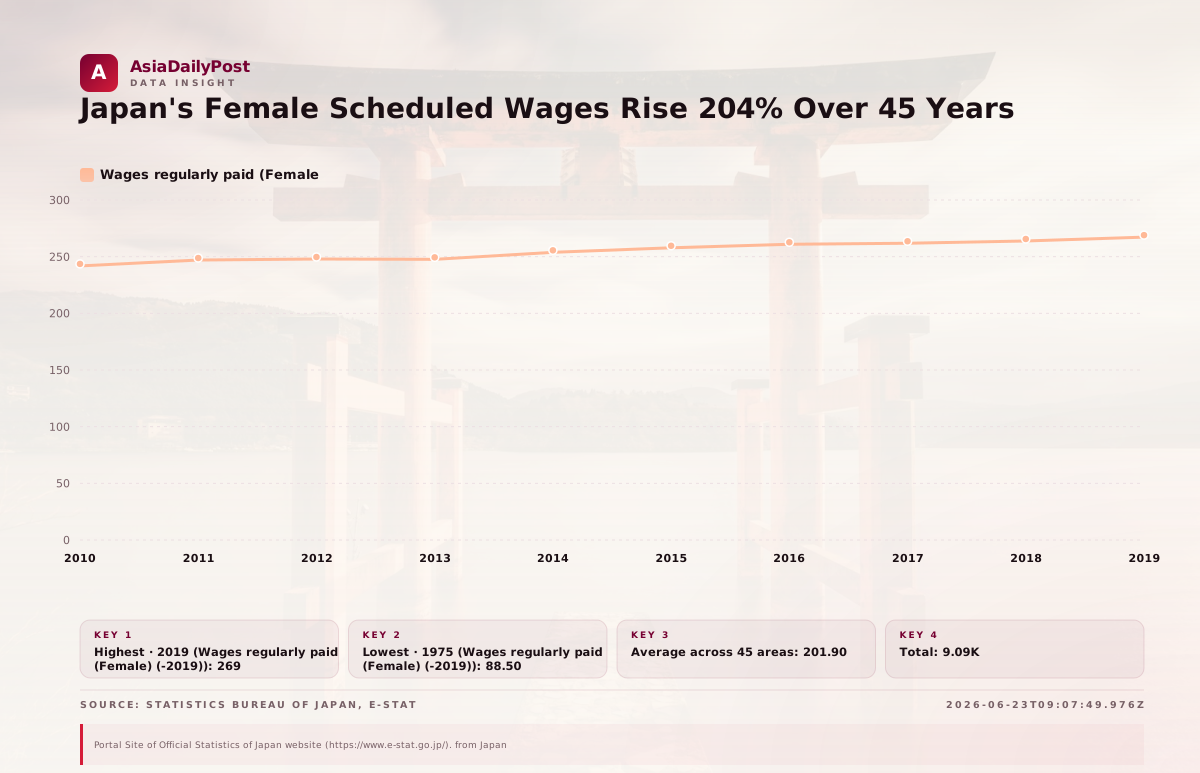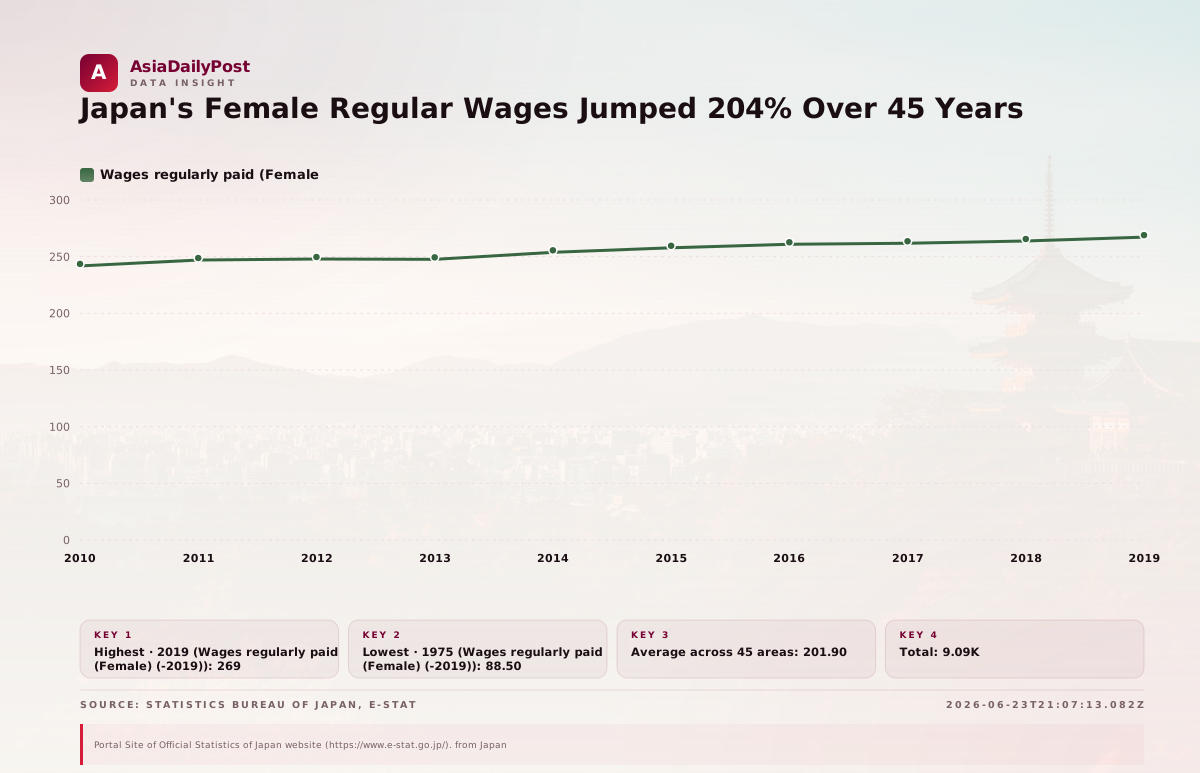
Japan’s female workforce saw scheduled monthly cash earnings more than triple between 1975 and 2019, climbing from 88,500 yen to 269,000 yen — a rise of 204 per cent, according to Statistics Bureau of Japan data released through the e-Stat portal. The 45-year trend, however, is really a story of two distinct periods: rapid catch-up growth in the late 20th century followed by a protracted stall.
Wages advanced briskly during the bubble-era 1980s, reaching 203,600 yen by 1992. Yet after Japan’s asset-price collapse, momentum drained away. Between 1998 and 2012, female scheduled pay oscillated in a tight band around 240,000 yen. There were even outright declines: in 2005 the average slipped to 239,000 yen and fell again to 238,600 yen in 2006. The 2008 global financial crisis failed to break the deadlock — 2009 recorded a virtually flat 243,200 yen. Only after 2013 did the series resume a modest upward track, adding about 25,000 yen over the final seven years to reach the 2019 peak.
For labour economists, the long plateau points to more than just deflation and sluggish demand. Women in Japan are disproportionately channeled into part-time and non-regular roles where pay growth is structurally weak. So while the headline figure nearly tripled since the mid-1970s, the post-2000 reality — just 33,900 yen added in 19 years — suggests that without a shift in employment composition, female regular wages may struggle to break far above their pre-pandemic levels. The figures predate 2020, leaving open whether the tight labour market of the 2020s has since delivered faster increases.
Source: Statistics Bureau of Japan, e-Stat · 2026-06-23T21:07:13.082Z