Clean water distribution in North Sumatra is far from uniform. BPS data for 2021 shows that piped water volumes vary enormously not only between cities but also by consumer type—household, commercial, industrial, and special-use—revealing where infrastructure is concentrated and where it barely exists.
What the numbers show
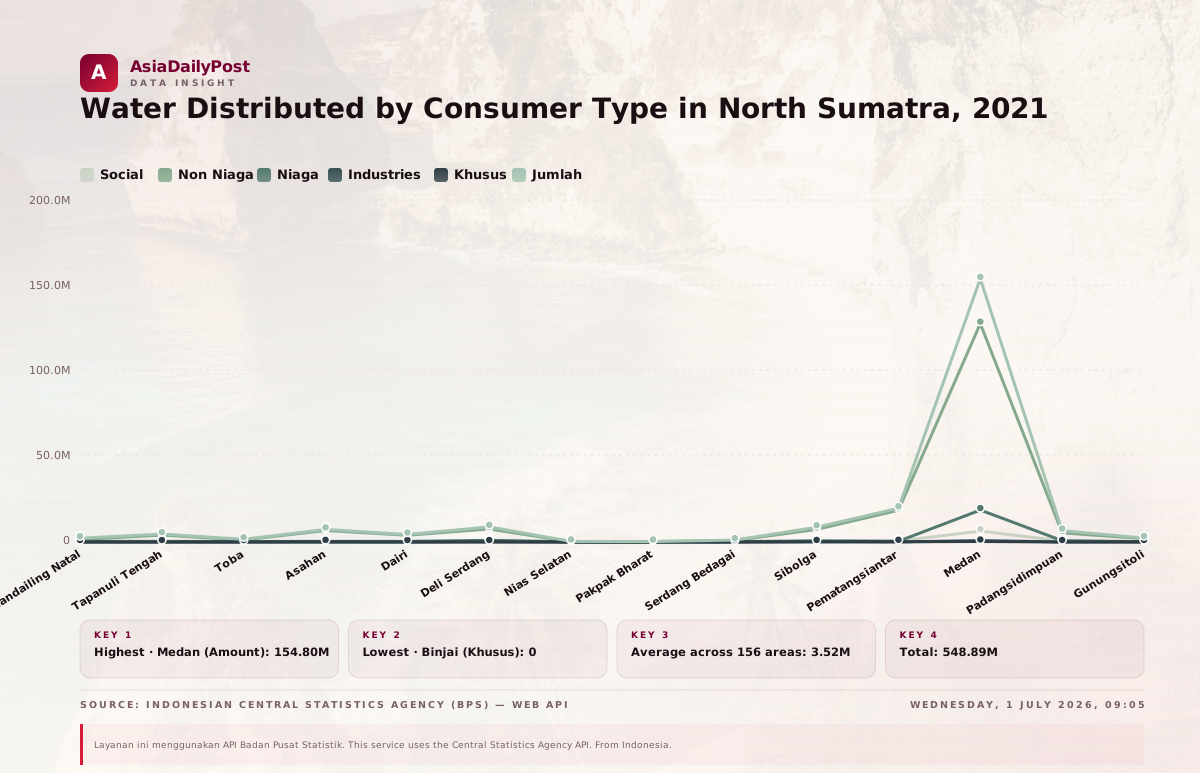
Medan recorded the single largest volume: 154,803,680 cubic meters in the total (Jumlah) category. At the other end, Binjai's special-use segment stood at zero. Across all 156 regency-category combinations, the total water distributed reached 548,889,632 m³, with an average of 3,518,523 m³ per record.
The second most telling detail
Industrial and special consumer categories were virtually absent outside Medan and a few other cities. Tebing Tinggi reported zero industrial volume and zero special volume, a pattern repeated in more than half of the 26 regencies/cities for those categories.
The gap between Medan and the rest is starker than the totals suggest
Medan accounted for roughly 28% of all recorded water volume, with its non-commercial segment alone (128.5 million m³) exceeding the entire total of any other regency. Pematangsiantar, the second-highest overall, reached only 19.9 million m³—less than one-eighth of Medan’s figure. Meanwhile, the industrial category recorded zero in 23 out of 26 locations, highlighting how piped water remains almost exclusively a household and small-business service outside the provincial capital.
- Medan’s household (Non Niaga) volume of 128.5 million m³ dwarfed all other single entries, indicating strong residential network coverage.
- Special-category water—often used for public facilities—was concentrated in just five cities; Binjai and Tebing Tinggi reported nothing.
- The average per record masks a heavily skewed distribution: the median region-category value was far below the 3.5 million m³ average.
- Industrial water distribution totaled only 1.2 million m³ province-wide, with Medan alone contributing over two-thirds of that slim total.
For water utility planners, the 2021 figures reveal a network still centered on Medan, with large swaths of North Sumatra lacking the commercial and industrial connections that could help fund broader household access—a structural imbalance that has yet to shift meaningfully.
Source: Indonesian Central Statistics Agency (BPS) — Web API · Wednesday, 1 July 2026, 09:05