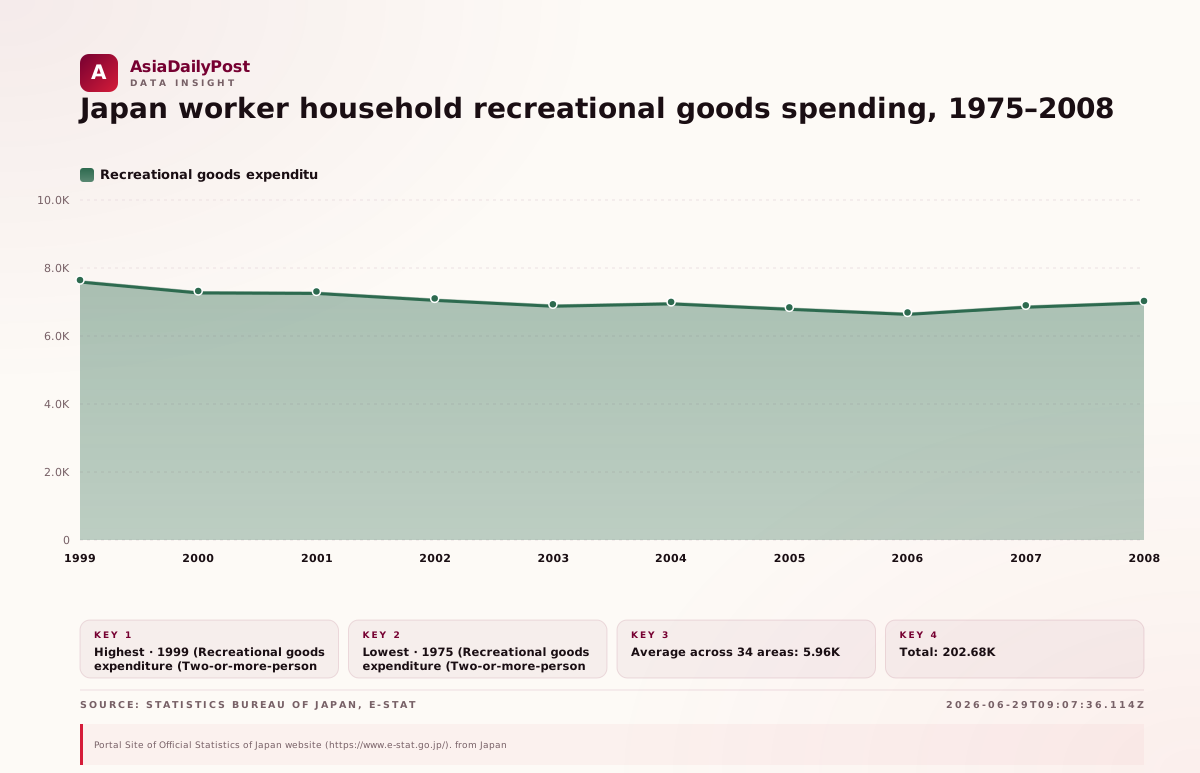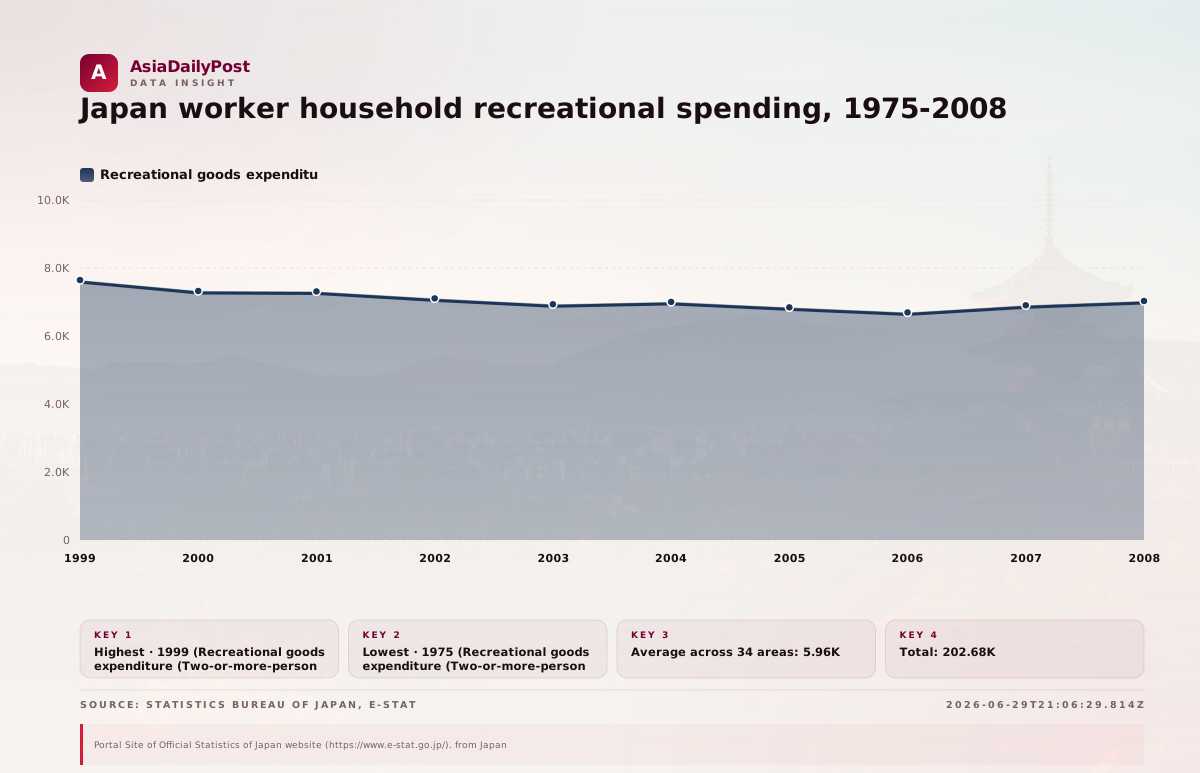
Recreational goods outlays by Japanese worker households rose from 2,719 yen in 1975 to a 7,645-yen peak in 1999 — a near tripling — before slipping to 7,030 yen in 2008, the final year in the Statistics Bureau's family budget time series.
The ascent to 1999
Spending rose almost every year from the 2,719-yen start, with particularly sharp jumps in the late 1980s and early 1990s. By 1990 the figure had already crossed 6,766 yen, and it continued climbing through the decade even as the broader economy cooled.
The 1999 peak of 7,645 yen represented a cumulative increase of 181 percent from 1975, reflecting a period when consumer electronics, sporting equipment, and other leisure goods commanded a growing share of household budgets.
Where the series began
The lowest recorded outlay came in 1975 at 2,719 yen. Over the full 34 years, the average annual spend was 5,961 yen, illustrating the long upward drift before the peak.
Post-peak softening
After 1999, recreational goods expenditure drifted generally downward, dipping to 6,693 yen in 2006 before a slight recovery to 7,030 yen in 2008. The pattern is consistent with long-term household budget reprioritisation during Japan's prolonged low-growth stretch.
- Peak year: 1999 at 7,645 yen
- Lowest year: 1975 at 2,719 yen
- 2008 close: 7,030 yen, 8 percent below peak
- Series average: 5,961 yen across 34 observations
- Overall growth: 2008 spending was 2.6 times the 1975 level
The resilience of recreational goods spending through the mid-1990s, followed by a gradual fade, fits a narrative of households holding onto leisure purchases for a time before ceding ground to more essential expenses in a deflationary environment.
Source: Statistics Bureau of Japan, e-Stat · 2026-06-29T21:06:29.814Z