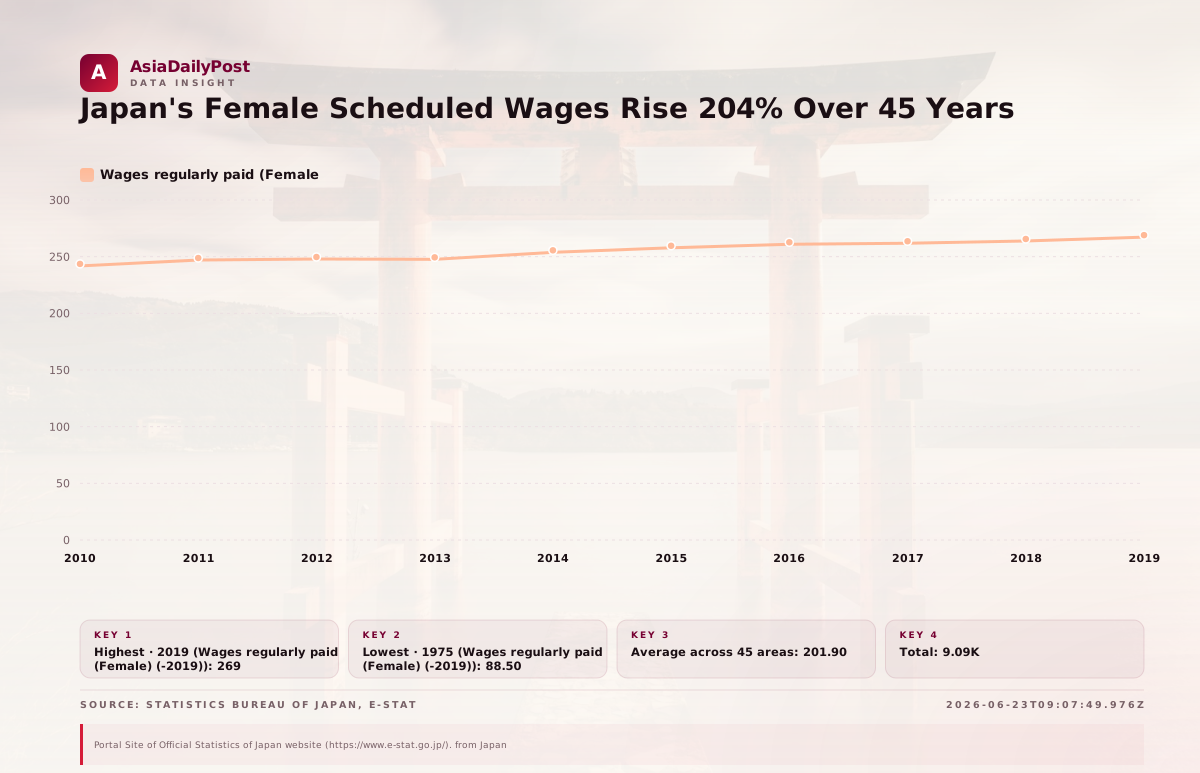
Japan's female workers saw their average monthly scheduled cash earnings more than triple over four and a half decades, climbing from 88,500 yen in 1975 to 269,000 yen in 2019, according to data from the Statistics Bureau of Japan compiled via the e-Stat portal. The 204 per cent increase, however, masks a prolonged stagnation during the 2000s that meant real take-home pay barely budged for years.
After steady rises through the bubble economy of the 1980s pushed monthly pay above 200,000 yen by 1992, the series hit a wall. Between 1998 and 2012, the average regularly paid wage for women hovered in a narrow band around 240,000 yen, dipping in 2005 to 239,000 yen and again in 2006 to 238,600 yen before edging back up. The global financial crisis did not cause a sharp fall — the 2009 reading of 243,200 yen actually ticked fractionally higher — but the flat trend overall is consistent with Japan’s “Lost Decades” of deflation and sluggish labour demand. The upward tilt only returned after 2013, with wages adding about 25,000 yen in the final seven years of the series to reach their peak in 2019.
For labour economists, the prolonged flatline also carries a gender dimension. Women remain concentrated in part-time and non-regular employment contracts in Japan, roles where pay growth tends to be weaker than for full-time male workers. So while the headline number has almost tripled since 1975, the pace of improvement after 2000 — just 33,900 yen in 19 years — suggests structural factors have kept women’s regular pay from keeping up with the economy’s long-term potential. With the figures now seven years old, it remains to be seen whether acute labour shortages and government “womenomics” initiatives have lifted women’s pay any faster in the 2020s.
Source: Statistics Bureau of Japan, e-Stat · 2026-06-23T09:07:49.976Z