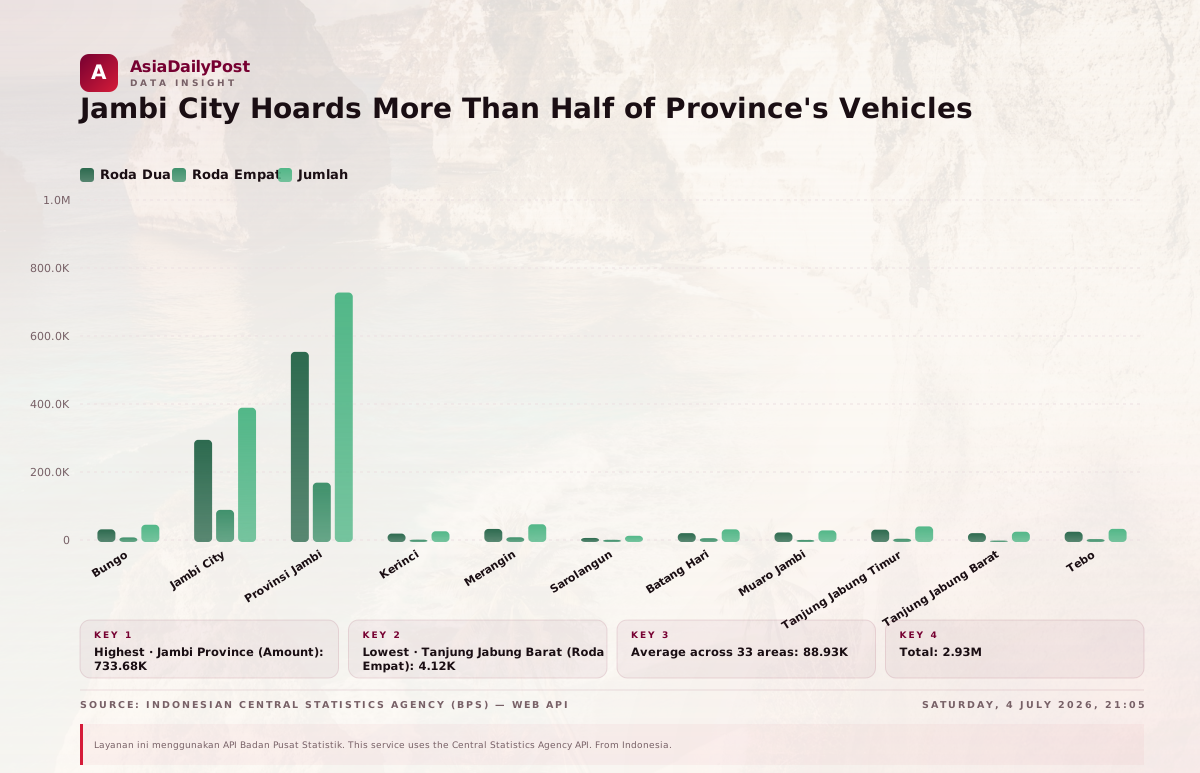
Jambi City registered 394,932 motor vehicles in 2018 — more than half of all vehicles in the province — while rural regencies struggled to top a few thousand four-wheelers, according to BPS data sourced from Jambi traffic police. The gap reveals a province where mobility is overwhelmingly urban.
Jambi City's grip
The provincial capital accounted for 54 percent of the 733,676 vehicles registered across Jambi. That dominance stretched across vehicle types: the city hosted nearly half of the province's two-wheelers and more than half of all four-wheelers.
Across the 11 regencies, two-wheelers were the backbone. The province logged 559,216 two-wheelers, meaning for every four-wheeler there were roughly three motorcycles. Even in areas like Bungo or Batang Hari, two-wheelers outnumbered cars three to one.
Two-wheelers everywhere
In Kerinci, two-wheelers reached 24,754 versus 6,825 four-wheelers. Merangin recorded 38,356 motorcycles and 13,885 cars. Sarolangun, one of the province's poorer regencies, had 11,950 two-wheelers and only 6,375 cars.
Where four wheels are scarce
Tanjung Jabung Barat had only 4,115 four-wheelers — fewer than the number of cars in a single large parking garage in the capital. Muaro Jambi and Sarolangun followed with 6,119 and 6,375 four-wheelers, respectively. For these districts, personal four-wheel transport was a rarity in 2018.
- Jambi City: 394,932 vehicles, 54% of the province total
- Tanjung Jabung Barat: 4,115 four-wheelers, the provincial low
- Two-wheelers: 76% of all registered vehicles
- Province total: 733,676 vehicles in 2018
The 2018 snapshot, now eight years old, leaves an open question: whether road upgrades and economic dispersal have since shifted the balance, or if Jambi City's concentration has only deepened. Regional planners have long flagged uneven transport access as a brake on rural growth.
Source: Indonesian Central Statistics Agency (BPS) — Web API · Saturday, 4 July 2026, 21:05