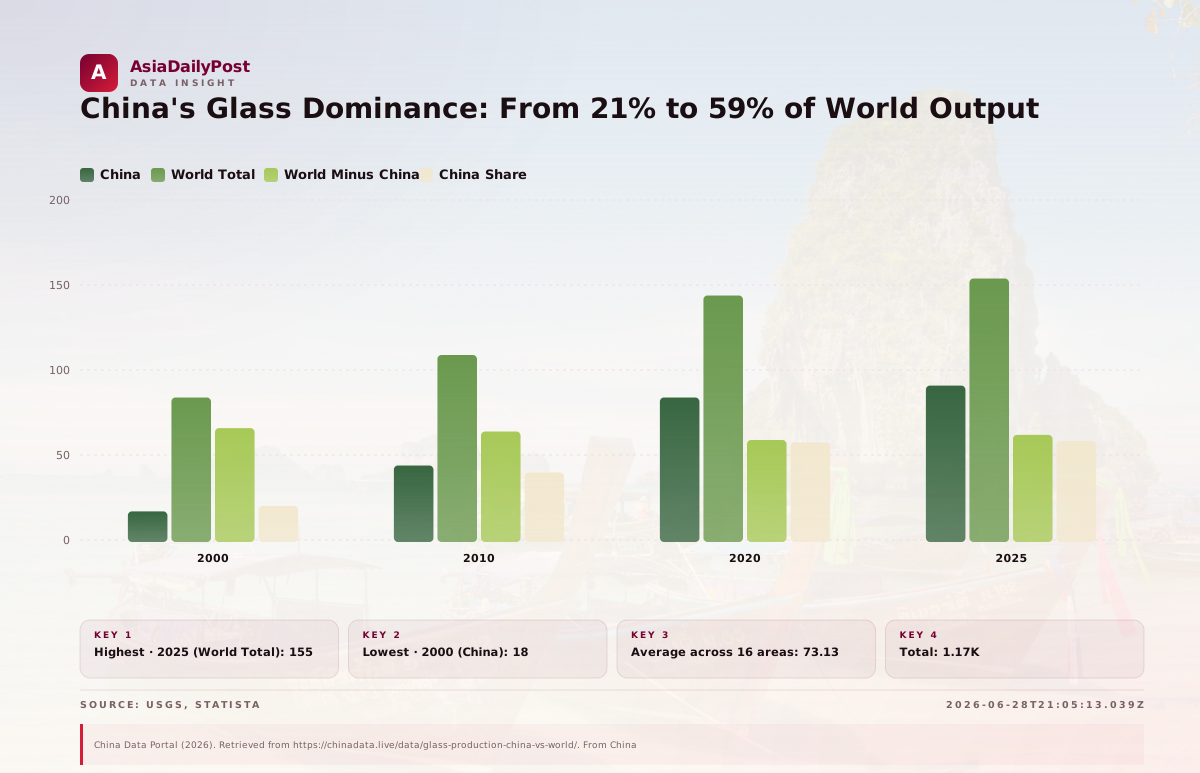
In the year 2000, China's flat glass production stood at 18 million tonnes, barely one-fifth of the global total. By 2025, that figure had surged to 92 million tonnes, or nearly three-fifths of all the flat glass made worldwide. How did one country reshape a foundational industry so thoroughly in a single generation?
How quickly did China's glass output grow?
The USGS time series paints a picture of relentless expansion. From 18 million tonnes in 2000, China's output jumped to 45 million tonnes in 2010, then to 85 million tonnes in 2020, before reaching 92 million tonnes by 2025. Over 25 years, production multiplied more than fivefold, reflecting the country's unprecedented construction boom and its role as the world's factory for downstream products like windows, mirrors, and solar panels.
What happened to the rest of the world?
While China accelerated, the rest of the global glass industry effectively treaded water. World production excluding China was 67 million tonnes in 2000; by 2025 it stood at 63 million tonnes, a slight contraction. This means that virtually all the net increase in global flat glass demand over the past quarter century was absorbed by Chinese plants, while producers elsewhere faced flat or declining output.
Where does the shift leave the global industry?
By 2025, China accounted for 59.4% of world flat glass production, up from 21.2% in 2000. The world total rose by 70 million tonnes over the period, but China's contribution exceeded that entire gain — in effect, China added more glass capacity than the rest of the world lost. The data suggests a structural rebalancing that few other basic materials have experienced.
- China added over 74 million tonnes of production since 2000, while the rest of the world shed 4 million tonnes.
- The global total grew by 70 million tonnes, meaning China accounted for more than 100% of net global growth.
- Even as growth slowed after 2020, China's share inched up from 58.6% to 59.4%, suggesting persistent competitive advantages.
Looking ahead, China's glass sector may pivot from sheer volume to higher-value products as domestic construction activity matures. For now, the numbers confirm an industry where one country's production footprint has no close parallel.
Source: USGS, Statista · 2026-06-28T21:05:13.039Z