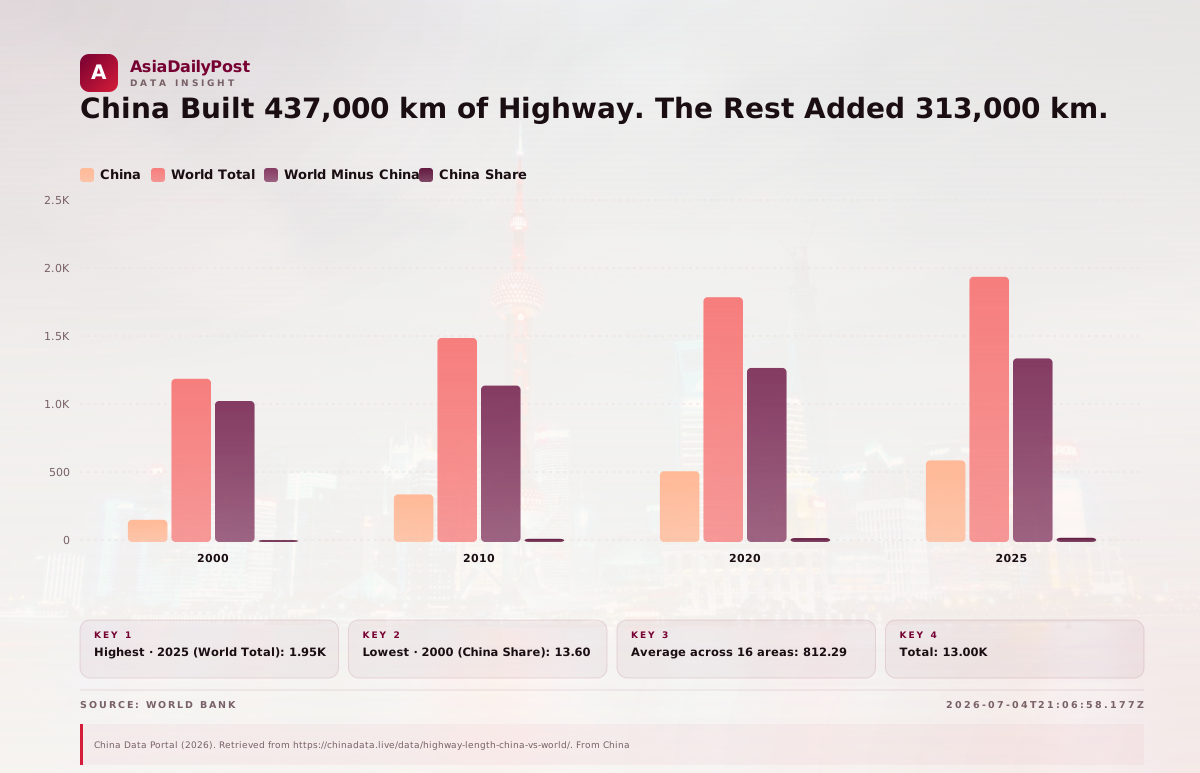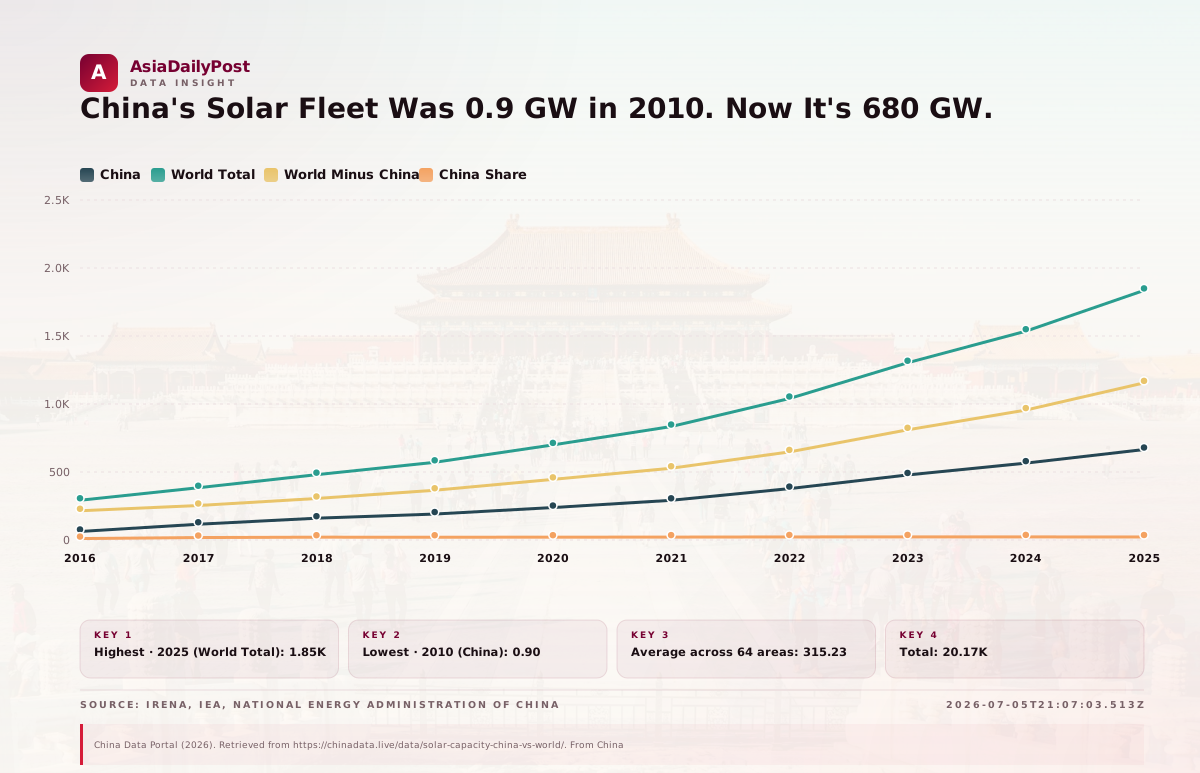
The global solar industry in 2025 closed the year with a record 1,850 GW of installed capacity — and China alone accounts for 680 GW of that total. Fifteen years earlier, in 2010, the country had just 0.9 GW on the grid, barely a rounding error in a then-40 GW world market.
Top of the chart: The 2025 milestone
The 2025 global solar fleet hit 1,850 GW — more than double the 714 GW tallied just five years earlier. China contributed 680 GW, or 36.8% of the total. The rest of the world finished the year with 1,170 GW, a figure that itself would have been unthinkable a decade ago. The data, compiled by IRENA and the National Energy Administration, shows China's share stabilizing near 37% after peaking at 37.4% in 2023, as installations in India, the European Union, and the United States accelerated.
The other end: Where it all began
In 2010, China's solar PV capacity stood at 0.9 GW — a mere 2.3% of the world's 40 GW. At the time, Germany, Spain, and Japan dominated the rankings, and China was a minor player whose entire solar fleet could be matched by a single large gas-fired power plant. The 2010 figure reflects a market still dependent on imported polysilicon and cells, with domestic policy support only beginning to take shape through a feed-in tariff scheme launched the following year.
What separates the two
The 15-year chasm was bridged by a combination of aggressive feed-in tariffs, a domestic manufacturing scale-up that crashed module prices, and grid investment that connected far-flung installations to demand centers. China's annual additions jumped from 2.2 GW in 2011 to 40.4 GW by 2017, and have averaged over 60 GW per year since 2021. The rapid buildout did not just add Chinese capacity — it halved the cost of solar electricity globally, making the technology competitive with coal and gas in most markets and triggering the surge now visible across India, the Middle East, and Southeast Asia.
- 2025: 680 GW
- 2024: 580 GW
- 2023: 493 GW
- 2022: 392.6 GW
- 2021: 306.6 GW
- 2020: 253.4 GW
- 2019: 205.5 GW
The sheer scale of China's solar fleet — now larger than the world's entire capacity just a few years ago — leaves the global energy transition with a single concentrated supply chain. Whether that concentration becomes a strategic vulnerability as trade tensions rise remains the open question for the next phase of solar deployment.
Source: IRENA, IEA, National Energy Administration of China · 2026-07-05T21:07:03.513Z