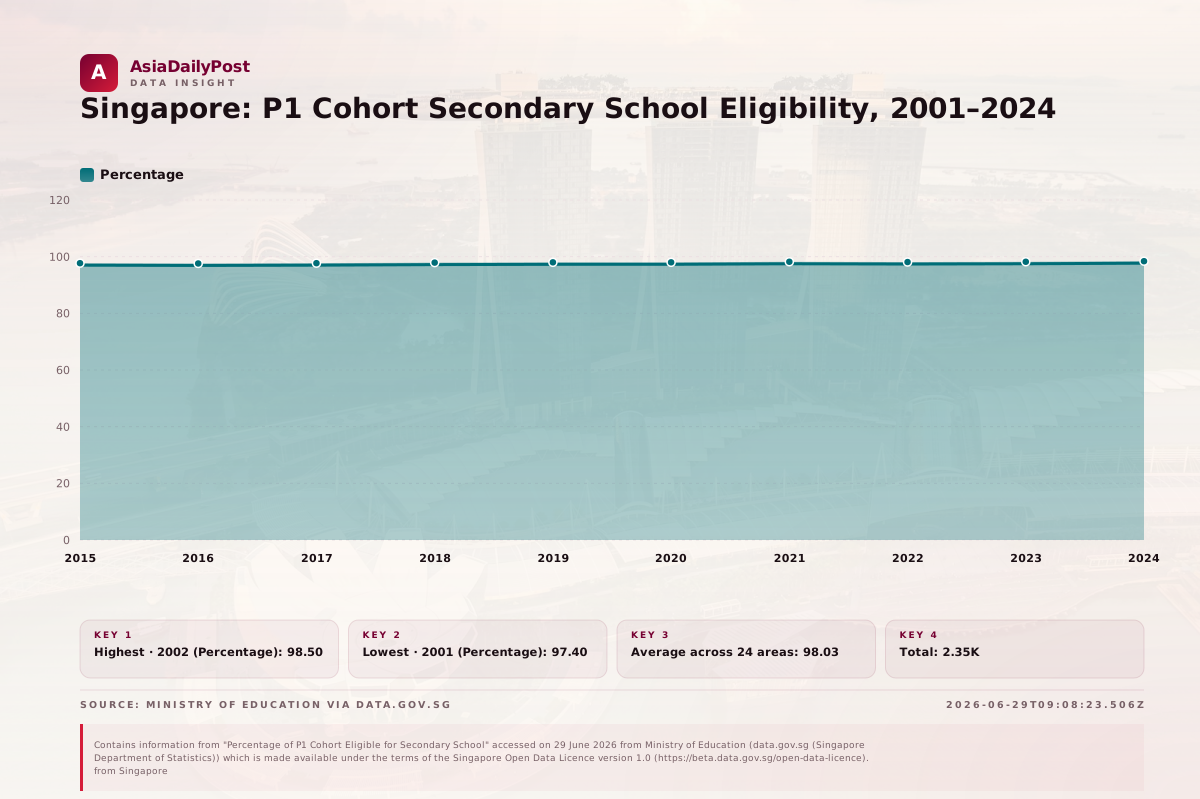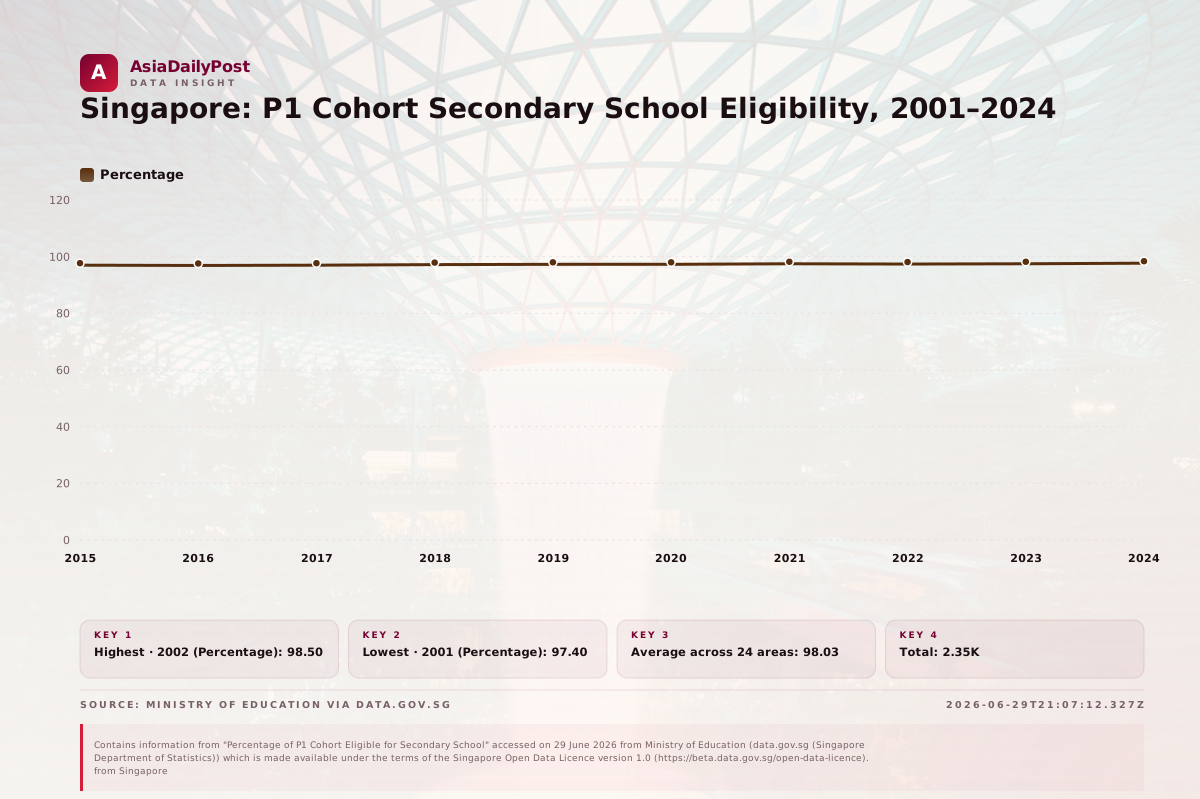
Singapore’s primary education system continues to deliver near-universal progression: the share of Primary 1 pupils eligible to advance to secondary school reached 98.5% in 2002, the highest point in a 24-year series that barely wavers above 97%.
A tight range
The eligibility share has never fallen below 97.4%, recorded only in the baseline year 2001. From 2002 onward, the floor rose to 97.6%, and the metric topped out at 98.5% in three separate years (2002–2004). The total spread covers only 1.1 percentage points, an unusually narrow band for a social indicator spanning two decades.
What it means
This steadiness is rooted in compulsory primary schooling that prioritizes foundational literacy and numeracy. Because every child must complete primary education, the eligibility metric acts as a near-perfect barometer of whether foundational standards are being met by the vast majority. Minor year-on-year shifts—usually less than 0.3 points—likely reflect slight demographic changes or fine-tuning of grade promotion criteria rather than systemic cracks. The near-universal eligibility ensures that tracking into secondary academic and technical streams begins from an almost complete cohort, helping to limit early attrition.
- Peak share: 98.5% — recorded in 2002, 2003, and 2004.
- Lowest reading: 97.4% — only in 2001.
- 2024 value: 98.4%, the second-highest observed.
For education policymakers, the 1.1-percentage-point band over two decades reconfirms that Singapore’s basic education pipeline leaves virtually no child ineligible for secondary progression.
Source: Ministry of Education via data.gov.sg · 2026-06-29T21:07:12.327Z