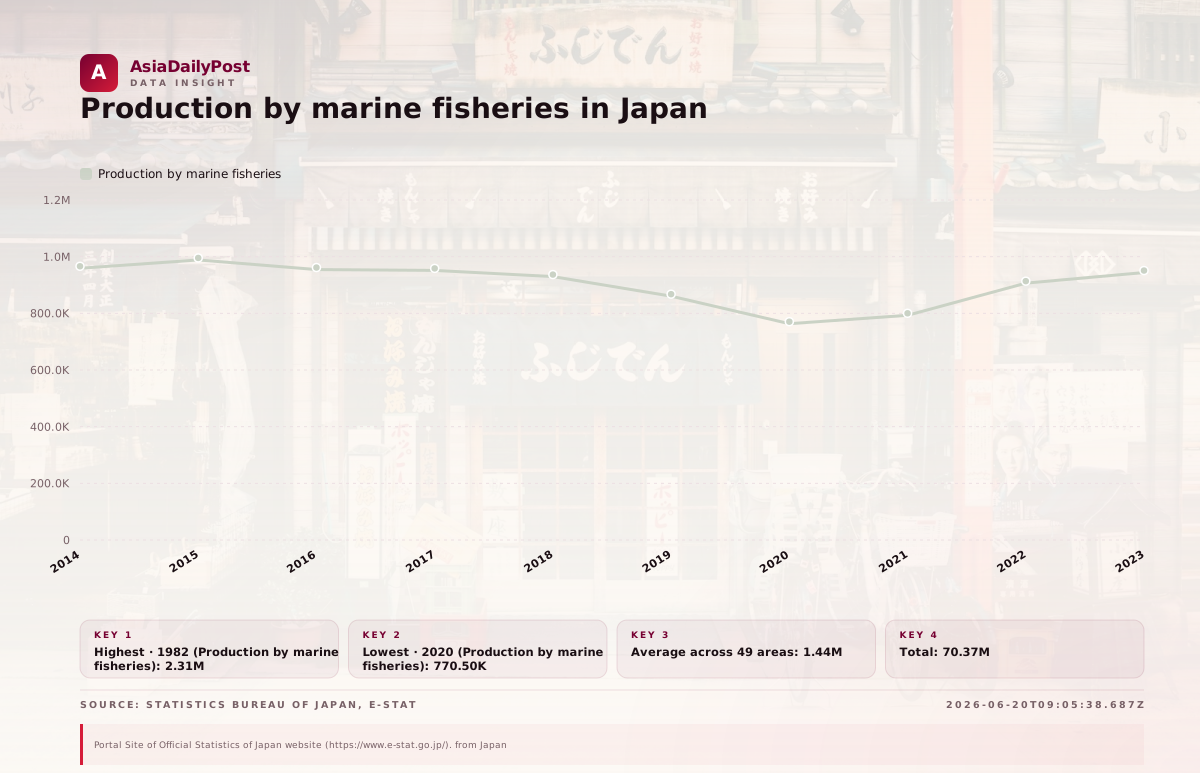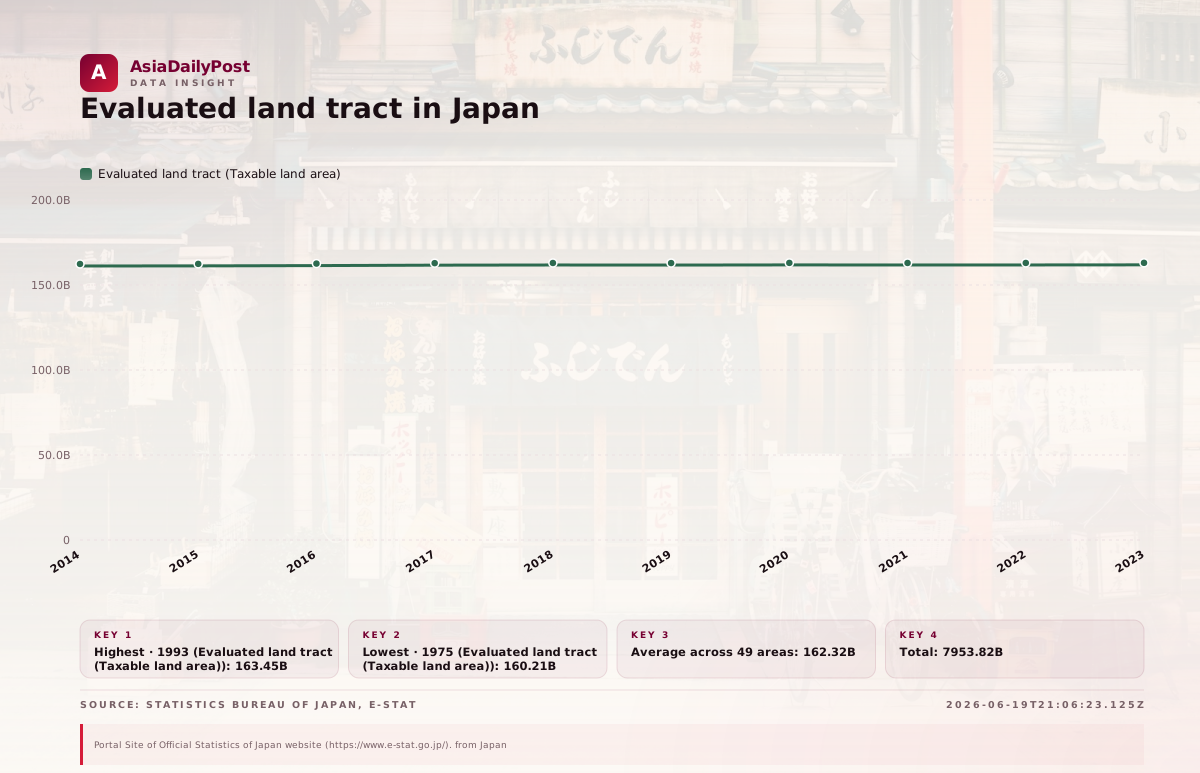
A new compilation of science data by Statistics Bureau of Japan, e-Stat places 1993 at the forefront of Japan, with a figure of 163.45B (Evaluated land tract (Taxable land area)) for 2026. The reading is the highest across the province's 49 regencies and cities, and stands in stark contrast to 1975, which posts the bottom value at 160.21B (Evaluated land tract (Taxable land area)). The disparity points to deep-seated structural differences in how the indicator unfolds locally.
The gap between the top and bottom of the rankings stands at 3.24B — a ratio of roughly 1.0 to one between 1993 and 1975. Analysts describe such a spread as modest, reflecting how local conditions, demographics and policy implementation can produce highly varied outcomes across geographically proximate areas.
Combined, the 49 districts return an average of 162.32B per district and a combined total of 7953.82B — a synthesis that helps put individual outliers in perspective. 1993 clears the provincial mean by 0.7%, while 1975 undershoots it by 1.3%.
Set against Japan's national picture, the Japan figures reflect dynamics observed across much of the country: a concentration of higher readings in urbanised districts, and persistently lower values in less-densely populated or more remote areas. While the spread documented in the 2026 data is consistent with previous reporting cycles, the persistence of the gap underscores the difficulty of producing rapid convergence in science through standard policy levers alone.
Data are sourced from Statistics Bureau of Japan, e-Stat and form part of an ongoing series tracking social and economic conditions across Japan. For Japan, the 2026 release includes readings for each of the 49 regencies and cities under the province's administrative purview.
The broader picture that emerges from the data is one of meaningful intra-provincial variation in science, a feature that mirrors patterns documented elsewhere in Japan. Whether the gap narrows over the next reporting cycles will depend on the success of targeted programmes aimed at strengthening the position of the weaker-performing districts in Japan.
Source: Statistics Bureau of Japan, e-Stat · 2026-06-19T21:06:23.125Z